Quantum Art PR Case Study: Stealth to a $140M Series A
By Kyle Porter, Executive Vice President & Managing Director.
Updated November 9, 2026
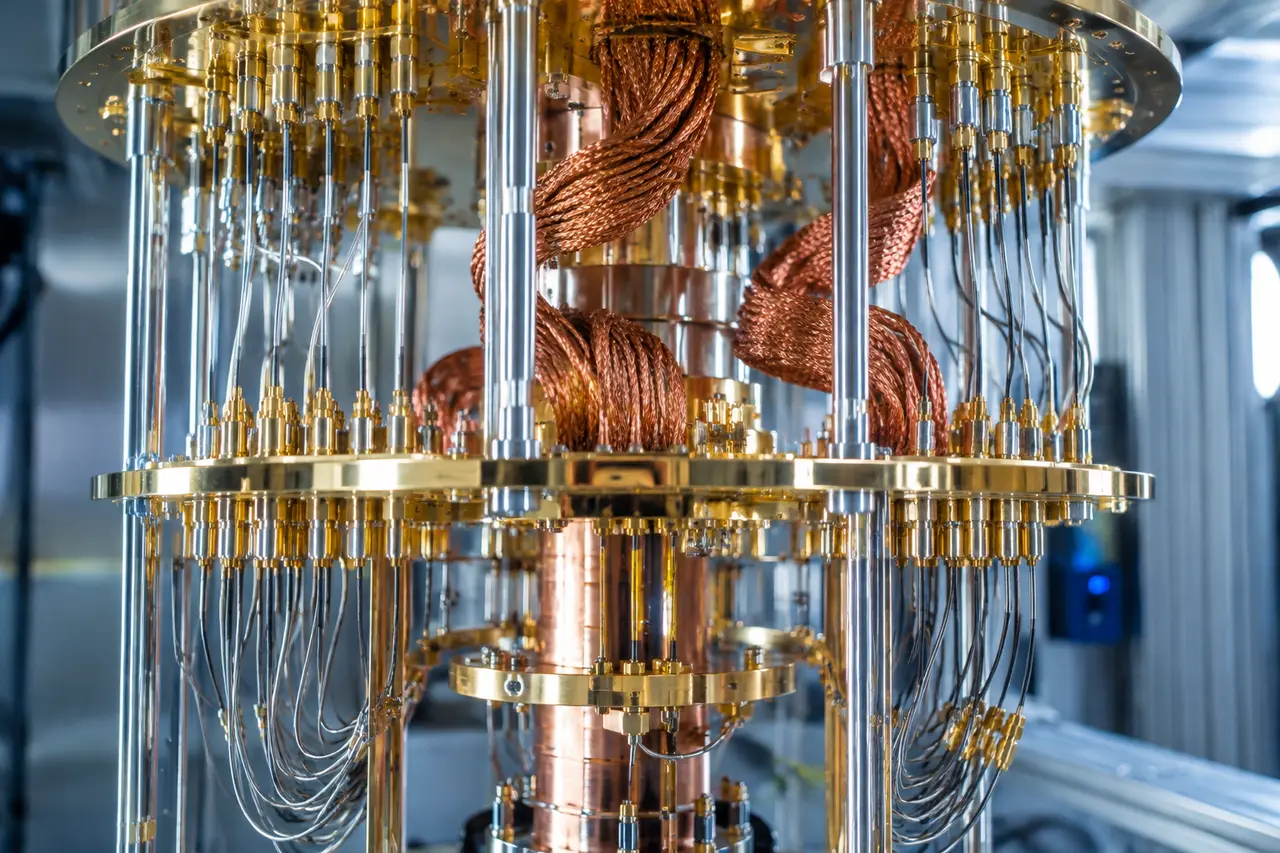
Quantum Art PR case study: how Virgo PR took a trapped-ion quantum startup from stealth to a $140M Series A with 100+ placements and Nvidia CUDA-Q coverage.
Virgo PR took Quantum Art, an Israeli trapped-ion quantum computing company, from stealth to a Series A of more than $140 million over an 18-month campaign. The program combined investor-grade messaging, a sequenced milestone calendar and more than 100 media placements, including Forbes, SiliconANGLE and the quantum trade press. The round closed at $100 million, then grew by an oversubscribed $40 million extension four months later.
Published November 9, 2026
On this page: the key facts, who Quantum Art is, why quantum PR is hard, what Virgo PR built, how the milestone calendar worked, the results, where the coverage ran, why a campaign beat a launch, lessons for deep tech startups and frequently asked questions.
What are the key facts of the Quantum Art PR case study?
The Quantum Art campaign ran 18 months and ended with a Series A of more than $140 million, supported by more than 100 placements. The table lists the key facts.
MeasureResult
Campaign length18 months, from stealth to Series A close Series AMore than $140 million Initial close$100 million in December 2025, led by Bedford Ridge Capital Extension$40 million, oversubscribed, in April 2026 Lifetime fundingAbout $164 million secured during the engagement Media placementsMore than 100 across business, trade, podcast and international outlets RecognitionNamed to Globes' Most Promising Startups of 2026
Who is Quantum Art?
Quantum Art is an Israeli developer of full-stack quantum computers built on trapped-ion qubits. Founded in 2022 as a spin-off from the Weizmann Institute of Science, the company uses a reconfigurable, multi-core architecture designed to keep qubits highly connected as systems scale.
Its public technical milestones include a fully controlled 200-ion chain, an NVIDIA CUDA-Q collaboration that cut circuit depth by a reported 10x, and a joint project with Ayalon Highways exploring quantum approaches to traffic congestion. Its flagship roadmap target is Perspective, a 1,000-qubit multicore system.
Why was quantum PR hard for a company coming out of stealth?
Quantum PR was hard for Quantum Art because it had to compete for investor attention against IBM, IonQ and Quantinuum while its flagship system was still in development. The company came to Virgo PR with no website narrative, no media footprint and no executive visibility, and reporters in the sector defaulted to larger names for comment.
The brief was specific: build the credibility infrastructure that would make a $100 million-plus raise possible, using the strength of the science instead of brand equity the company had not yet earned.
What did Virgo PR build for Quantum Art?
Virgo PR built the entire communications program from zero, in four connected parts.
Messaging architecture
The team reviewed the company's scientific papers, technical milestones and internal strategy discussions, then turned dense quantum physics into a narrative investors could repeat. The executive team was media trained to deliver it under pressure.
A sustained milestone calendar
Virgo PR mapped announcements across the full pre-funding window so the company stayed visible for months instead of burning one news cycle.
Tier-one and trade media
Introductions went to Forbes, The Wall Street Journal, Business Insider and SiliconANGLE, alongside quantum trade press and relevant podcasts. Each placement was chosen to reach investors and enterprise buyers, not vanity audiences.
Source positioning
Virgo PR positioned Quantum Art executives as go-to sources on trapped-ion architecture, multicore quantum computing and real-world optimization, which builds editorial authority that compounds over time.
How did the 18-month milestone calendar work?
The milestone calendar worked by sequencing each announcement so it built on the last. Instead of one launch moment, the company released proof points in a deliberate order across the pre-funding window. The table shows the sequence and what each stage proved.
StageAnnouncement typeWhat it proved to investors
1Architecture revealThe multicore trapped-ion design is different from peers 2Roadmap milestonesA credible path from current systems toward 1,000 qubits 3Peer-reviewed researchReal technical progress that outside experts can check 4Commercial partnershipsNamed collaborators such as NVIDIA and Ayalon Highways 5Funding newsThe $100 million Series A, then the $40 million extension
By the time investors compared the company with its peers, they had already seen it repeatedly in credible outlets.
What results did the Quantum Art PR campaign deliver?
The campaign carried Quantum Art from stealth to one of the most visible trapped-ion quantum computing companies in the market, and the funding results are the clearest proof.
ResultDetail
Series AMore than $140 million: an initial $100 million close led by Bedford Ridge Capital and an oversubscribed $40 million extension four months later Lifetime fundingAbout $164 million secured during the engagement Media placementsMore than 100 across tier-one business, trade, podcast and international outlets RecognitionNamed to Globes' Most Promising Startups of 2026 InvestorsBedford Ridge Capital, Hudson Bay Capital, Poalim Equity, Battery Ventures, Destra Investments, Lumir Growth Partners, Disruptive AI and Harel Insurance, among others
These figures describe the engagement as a whole. Funding depends on many factors besides PR, and this page does not claim that media coverage alone produced the round.
Where did Quantum Art get press coverage?
Quantum Art coverage spanned tier-one business press, quantum trade publications and podcasts. Selected placements are listed by type.
Tier-one business and funding
-
SiliconANGLE: Quantum Art raises $140M with a multicore architecture
-
The Wall Street Journal: coverage of Bedford Ridge Capital's $100 million investment in Quantum Art
-
Business Insider: coverage of larger checks in Israeli tech, featuring Quantum Art
Trade and technical press
-
Engineering.com: Quantum Art advances scalable quantum computing with CUDA-Q
-
GamesBeat: Quantum Art integrates Nvidia for scalable quantum computers
-
Quantum Zeitgeist: Fully programmable quantum computing with trapped ions
-
Quantum Computing Report: Quantum Art extends Series A to $140M
Podcasts and broadcast
-
TechFirst with John Koetsier: 1 million qubits in a sticky-note-sized footprint
-
Post Quantum World Podcast: Quantum vs. traffic with Tal David of Quantum Art
Why did a campaign beat a launch for Quantum Art?
A campaign beat a launch because credibility has to exist before the capital raise, not during it. Most companies in stealth treat PR as a launch-day event, which leaves a credibility vacuum that better-known competitors fill.
Virgo PR built the narrative first. By the time Quantum Art went to market for its Series A, investors had already seen the company in Forbes, the Journal and the quantum trade press, repeatedly, over months. The story was no longer new and the credibility was already in place, which is why the round closed at $100 million and then extended when demand exceeded supply.
What can other deep tech startups learn from the Quantum Art campaign?
Deep tech startups can learn that sustained, sequenced proof points do more for a funding round than any single announcement. Four practices carried the Quantum Art program, and they work as a checklist.
-
Start before the raise by beginning the media program 12 to 18 months ahead of fundraising.
-
Translate the science into a narrative investors can repeat without a physics degree.
-
Stack proof points by sequencing research, partnerships and roadmap news so each builds on the last.
-
Aim at the buyers by choosing outlets investors and enterprise customers read, not outlets that only look impressive.
For the tactics behind these steps, see Virgo PR's guides to quantum computing PR strategy, media coverage for a quantum startup and deep-tech media coverage.
Who should hire a quantum computing PR agency?
Quantum, AI hardware and other deep tech companies that need to explain complex science to investors and enterprise buyers should work with an agency that understands both. Virgo PR supports funding announcements through its investor relations work and serves technology companies across hardware, software and AI. See how Virgo PR ranks in the list of quantum computing PR agencies, or read how to choose a PR agency for an emerging technology company.
Frequently asked questions
Which PR agency worked with Quantum Art?
Virgo PR built Quantum Art's communications program from stealth, running an 18-month campaign that supported its Series A.
How much did Quantum Art raise?
Quantum Art raised a Series A of more than $140 million: a $100 million close led by Bedford Ridge Capital in December 2025 and a $40 million extension in April 2026.
What is trapped-ion quantum computing?
Trapped-ion quantum computing uses individual atoms suspended in electromagnetic fields as qubits. The approach offers high fidelity, and companies such as Quantum Art, IonQ and Quantinuum are scaling it in different ways.
How long does a quantum computing PR campaign take?
Programs that support a funding round typically need 12 to 18 months so announcements can compound. The Quantum Art campaign ran 18 months from stealth to Series A close.
Does Virgo PR work with quantum and deep tech startups?
Yes. Virgo PR works with quantum computing and other deep tech companies on messaging, media relations, milestone planning and investor communications. Contact the Virgo PR team to start a conversation.
Follow us
LinkedIn