
Hydrogen Fuel Cell PR Agency: Nikola, Hyzon and Plug Cases
By Kyle Porter, Executive Vice President & Managing Director.
Updated November 23, 2026
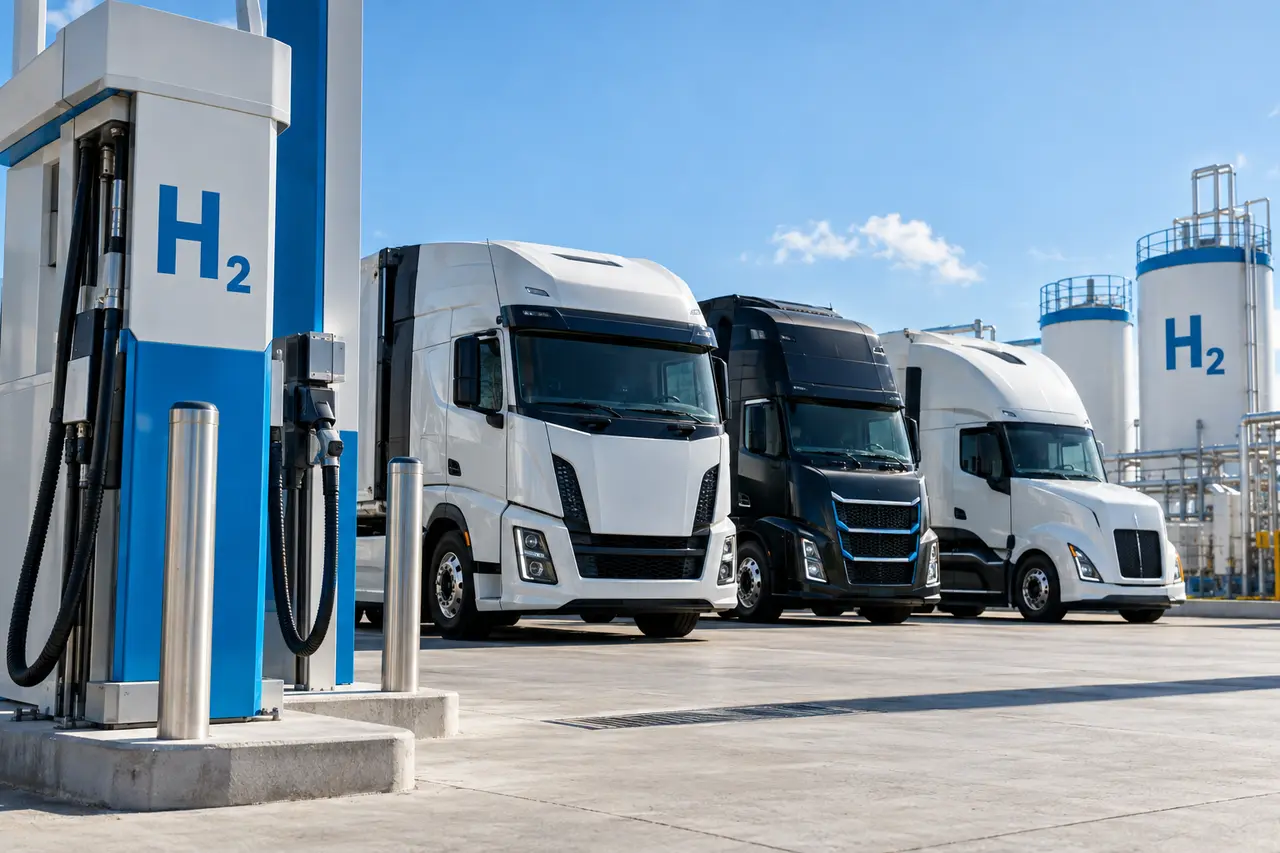
A hydrogen fuel cell PR agency plans news for Transport Topics, EnergyTech and the business press. Nikola, Hyzon and Plug show how claims meet records.
A hydrogen fuel cell PR agency plans and places news about hydrogen production, fuel cell vehicles and refueling infrastructure with the trucking, energy and business press that fleet buyers, regulators and investors read. The work covers financings, government awards, product demonstrations and crisis response, each tied to figures a reporter can check against a filing, an agency release or a court record.
In this guide
Who covers hydrogen, and what do reporters check?
Hydrogen is covered by trucking, energy and business reporters who check demonstrations and sales claims against filings and agency records. Transport Topics, Heavy Duty Trucking and Overdrive cover the truck makers, EnergyTech and CleanTechnica cover production projects and federal financing, and Compliance Week covered the SEC action against Hyzon. TechCrunch and the Associated Press covered the Nikola case.
The records reporters reach for are the Securities and Exchange Commission's press releases and complaints, the Department of Energy's own project pages, and bankruptcy court filings. A hydrogen company's materials have to match those documents, because the documents are public.
What does a hydrogen fuel cell PR agency actually do?
A hydrogen fuel cell PR agency turns demonstrations, financings and federal awards into stories that trucking and energy reporters can verify. Five kinds of work make up most programs.
-
Funding and federal award news. Pairs amounts, terms and project sites with the agency document. It lands in EnergyTech, CleanTechnica and the business press.
-
Vehicle and equipment demonstrations. Produces video, test conditions and fleet data with a named customer. It lands in Transport Topics, Heavy Duty Trucking and Overdrive.
-
Investor communication. Keeps statements consistent with SEC filings, including after a SPAC merger. It lands in the business and financial press.
-
Short-seller and controversy response. Prepares point-by-point answers tied to documents for business and trade press.
-
Search and AI answer visibility. Keeps one set of company facts across pages and releases, which shows up in Google results and AI answers.
Virgo PR covers the neighboring sector in its energy infrastructure PR agency page, special purpose acquisition company costs in its SPAC PR cost guide, and claim checking in its greenwashing PR cases.
What did Nikola's bankruptcy release say, and what did the record add?
Nikola's bankruptcy release led with usage figures, while the surrounding record added the company's production numbers and its founder's conviction. Nikola and nine subsidiaries filed for Chapter 11 in Delaware on February 19, 2025, with about $47 million in cash, and sought approval to auction the business. Chief executive Steve Girsky said in the release that customers had logged about 3.3 million fleet miles on its fuel cell and battery-electric trucks and that its HYLA fueling network had dispensed well over 330 metric tons of hydrogen.
The record around the release was longer. Nikola went public through a special purpose acquisition company in June 2020 and was valued at about $30 billion at its peak, according to the Associated Press. Hindenburg Research published a fraud report in September 2020, and founder Trevor Milton resigned that month. Milton was convicted in 2022 of securities fraud and wire fraud and sentenced to four years in prison, the AP reported. Prosecutors said a promotional video had shown a truck that was not working being rolled down a hill.
Yahoo Finance reported that Nikola had built only about 600 vehicles since 2022, and electrive reported that the company recalled all 209 battery-electric trucks it had delivered in 2023. A bankruptcy release that cites miles driven and hydrogen dispensed will be read next to production counts and recalls. Giving the denominator, such as how many trucks produced the miles, lets the company state its own figure first.
What did Hyzon's SEC settlement show about demonstration claims?
Hyzon's SEC settlement shows that regulators test specific statements, such as the date of a first delivery and the number of vehicles sold. The SEC announced on September 26, 2023 that Hyzon Motors and two former executives had settled charges of misleading investors about customer relationships and vehicle sales before and after Hyzon's July 2021 merger with Decarbonization Plus Acquisition Corp. Hyzon agreed to a $25 million penalty, Transport Topics reported.
The SEC's complaint alleged that Hyzon falsely stated it had delivered its first fuel cell electric vehicle in July 2021 and posted a video of a vehicle that was not equipped to run on hydrogen. It also alleged Hyzon reported selling 87 vehicles in 2021 when it had sold none. The complaint said the share price fell about 85 percent across announcements from September 2021 through March 2023. Blue Orca Capital, a short seller, had published allegations about Hyzon on September 28, 2021, according to Hyzon's own SEC filings.
Craig Knight, Hyzon's former chief executive, and Max Holthausen, a former managing director of its European unit, settled the charges against them, with civil penalties of $100,000 and $200,000, Transport Topics reported. For a hydrogen company, the practical rule is to publish a demonstration only with its conditions, such as what ran on hydrogen, for how long and with whom, and to use the word sold only for completed sales.
What did the DOE's Plug Power guarantee show about federal news?
The DOE's Plug Power announcement shows that a federal financing carries the agency's own numbers, which the company's release has to match. The Department of Energy announced on January 16, 2025 the closing of a $1.66 billion loan guarantee, made up of $1.55 billion in principal and $107 million in capitalized interest, to a Plug Power subsidiary. The money would help finance up to six facilities to produce and liquefy hydrogen using Plug's electrolyzers.
The DOE listed its own projections: 100 to 200 jobs during construction, at least 50 new full-time jobs at each location, and an estimated 84 percent reduction in greenhouse gas emissions compared with conventional hydrogen. Plug had applied in November 2020, which means the process took more than four years. EnergyTech reported that the first plant would be in Graham, Texas, with electrolyzers powered by an adjacent wind farm, and noted the loan was announced in the last days of the Biden administration.
A company announcing a federal award should publish the agency's number and the agency's description side by side, and attribute the emissions and jobs figures to the agency. Those estimates belong to the DOE, and a reporter will treat them that way.
What do the three cases have in common?
In each case a third-party record fixed the number that mattered. Here is how each played out.
-
Nikola, February 19, 2025. The release cited 3.3 million fleet miles and 330 metric tons of hydrogen dispensed. Reporters set that beside about 600 vehicles built since 2022, a 2023 recall and the founder's conviction.
-
Hyzon, September 26, 2023. The company had reported 87 vehicles sold in 2021. The SEC complaint said none were sold that year.
-
Plug Power, January 16, 2025. The DOE announced a $1.66 billion guarantee and an 84 percent emissions reduction estimate. The DOE project page and an application date of November 2020 anchored the story.
The Plug case is the one where the figures came from an agency, and the other two show what happens when company figures meet a regulator or a court.
How do you choose a hydrogen fuel cell PR agency?
Choose a hydrogen fuel cell PR agency by asking for named trade placements, a process that matches every claim to a document, and a plan for investor and regulator scrutiny. Six questions bring out the difference.
-
Trade press record. Ask which trucking, energy or business stories came from their pitches. Request links to published stories with dates.
-
Demonstration standards. Ask how they document what a video or test actually shows. Request a written checklist with test conditions.
-
Filing alignment. Ask who matches each release number to an SEC filing or agency document. Request a written check for every figure.
-
Controversy readiness. Ask who responds to a short-seller report, and with what documents. Request a response protocol and a named spokesperson.
-
Reporting. Ask how results are reported. Request a placement list, not impressions alone.
-
AI answers. Ask whether they check what ChatGPT and Google AI Overviews say about the company. Request a sample answer check with sources.
Virgo PR is a boutique PR, investor relations and digital content agency that builds media programs for hydrogen, fuel cell and clean energy infrastructure companies. Retainers start around $10,000 a month with a four-month minimum and cover media relations, executive commentary, announcements and AI search visibility work. This guide uses public cases only, and none of the companies or agencies named above are Virgo PR clients. The wider category is covered in the cleantech PR campaigns comparison. A first conversation usually settles the next announcement, the customer or agency record that can be cited, and the one number a reporter can verify.
Frequently asked questions
How much does a hydrogen fuel cell PR agency cost?
Virgo PR retainers start around $10,000 a month with a four-month minimum. Hydrogen programs often add investor and regulatory review, so ask any agency to state in writing who checks figures against filings and how much of that is included.
Which outlets matter most for hydrogen news?
Transport Topics, Heavy Duty Trucking and Overdrive cover hydrogen trucks, EnergyTech and CleanTechnica cover production projects and federal financing, and Compliance Week covers regulatory actions. TechCrunch and the Associated Press covered Nikola's bankruptcy.
Does hydrogen PR affect AI search answers?
Published coverage gives AI search tools sources to retrieve, and consistent figures across a release, a fact sheet and trade stories make an answer more likely to repeat the right number. SEC and DOE pages are sources too, so company pages should state facts that match them. See the generative engine optimization agency page for the method.
How should a hydrogen company describe a demonstration?
A hydrogen company should state what ran on hydrogen, the test conditions, the duration and the customer, and should keep the raw video and data on file. The SEC's Hyzon complaint centered on a vehicle shown in a video that was not equipped to run on hydrogen.
What should a hydrogen company say about financing?
A hydrogen company should cite the agency's announcement and numbers, attribute emissions and jobs estimates to the agency, and say what stage the financing has reached. The DOE described Plug Power's guarantee as a closed loan guarantee for up to six facilities, not a completed project.
Follow us
LinkedIn