Expertise · September 26, 2026
How EV Brands Use Earned Media to Overcome Range Anxiety
By Virgo PR Editorial
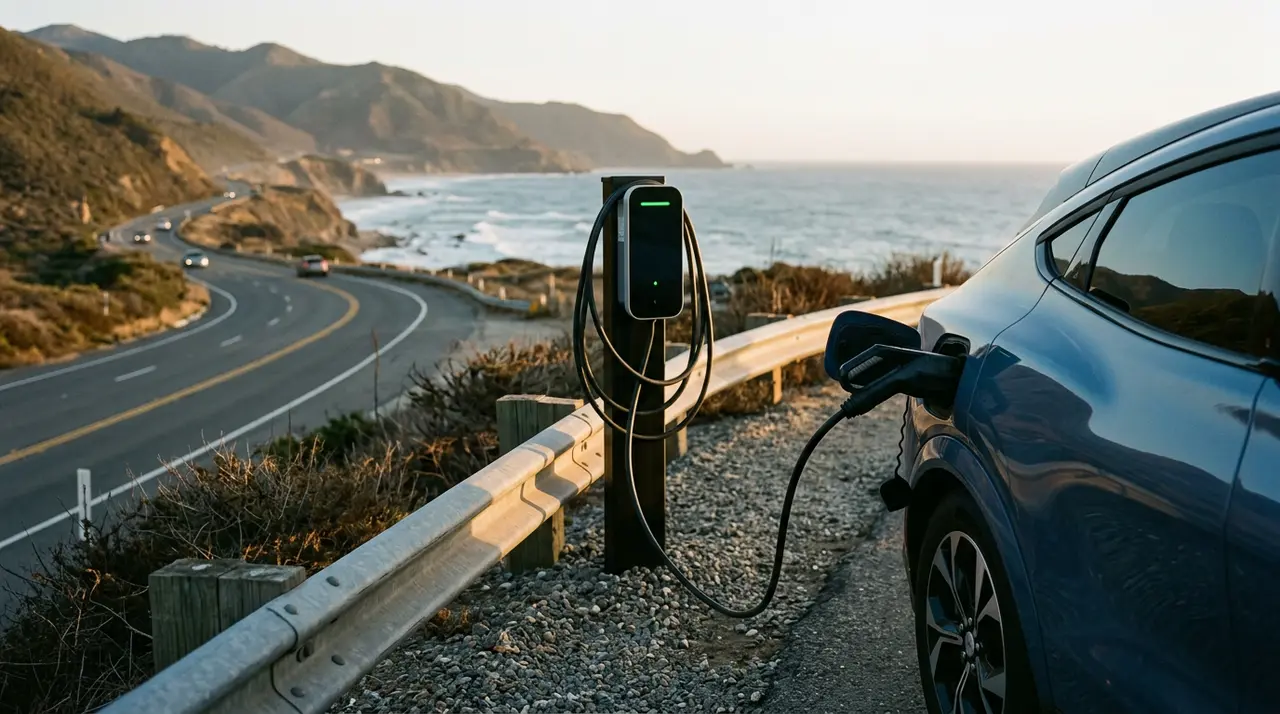
EV brands overcome range anxiety through earned media by putting independent, third-party sources, journalists, YouTube reviewers, and government data, in front of buyers instead of relying on brand-controlled ads. A J.D. Power 2024 study found range anxiety remains the top reason cited by U.S. consumers for not buying an EV, named by 46% of respondents. PR campaigns that pair real driving data with named journalist coverage move that number more than paid media does.
Why does range anxiety still stop EV sales?
Range anxiety persists because most buyers do not trust manufacturer-published range figures. J.D. Power's 2024 U.S. Electric Vehicle Consideration study found that 46% of non-EV owners cited range as their top concern, a number that has held steady across three consecutive years of the survey. Charging infrastructure gaps compound the problem: the U.S. Department of Energy counted just over 61,000 public charging stations nationwide as of early 2025, concentrated heavily in California and the Northeast.
How does third-party testing change buyer trust?
Third-party testing changes buyer trust because it removes the manufacturer as the source of the claim. When Consumer Reports or Edmunds runs an independent range test and a journalist reports the result, readers treat the number as verified rather than promotional. This is the mechanism behind why earned coverage outperforms a brand's own spec sheet: the claim now carries a third-party's reputation, not just the manufacturer's.
What role do YouTube reviewers play in EV decisions?
YouTube reviewers play a measurable role because long-form road-trip and range-test videos let buyers see real-world performance before a dealership visit. Channels built around independent EV testing, such as Out of Spec Reviews, built audiences specifically by running vehicles to empty on public roads and publishing the exact mileage. PR teams that seed test vehicles to these channels are targeting the exact moment a buyer is doing pre-purchase research, not the moment they are already sold.
Why does source substitution work on skeptical buyers?
Source substitution works because a buyer who sees a manufacturer claim of 300 miles of range treats it as an aspirational marketing number, while a buyer who watches an independent driver hit 287 miles on camera treats that as an observed fact. J.D. Power's 2024 data confirms the underlying concern is trust in the number, not the number itself, which is why third-party verification moves the needle more than a bigger claimed range would. This is the same mechanism at work in creative tech PR stunts more broadly: independent verification converts a marketing claim into a news story.
Which automaker's earned media campaign changed public perception?
Ford's F-150 Lightning launch campaign in 2022 used televised range and towing demonstrations conducted by outside outlets rather than Ford's own marketing team, including a widely covered segment in which the truck powered a home during a blackout. Reuters and multiple regional outlets covered the blackout story independently, which spread the towing and range data through news coverage instead of Ford-produced ads. The campaign is credited with helping generate over 200,000 reservations within a year of the truck's unveiling, according to Ford's own reservation disclosures at the time.
How should EV brands structure a range-anxiety campaign?
EV brands should structure the campaign around three elements: a named independent tester, a specific measurable claim, and a distribution plan that reaches buyers during research, not after purchase. PR's broader role in shaping EV industry adoption extends beyond range anxiety alone, but range remains the single largest objection PR teams need a specific plan to address, according to J.D. Power's ongoing consideration research.
What should EV brands avoid when pitching range claims?
EV brands should avoid pitching unverified range numbers to media outlets that will simply reprint the manufacturer's claim without independent testing. A claim that is not independently verified provides none of the trust benefit described above and can backfire if a reviewer's real-world test later contradicts it publicly. The safer approach is to invite the test rather than assert the result.
How does charging infrastructure coverage support range confidence?
Charging infrastructure coverage supports range confidence by giving buyers a realistic picture of where and how often they can charge, which matters more to daily usability than peak range alone. The U.S. Department of Energy's national charging station count, updated regularly, is a citable government source that PR teams can pair with regional rollout news to show concrete progress rather than a vague promise that infrastructure is improving. Virgo PR's technology PR practice works with clients across the mobility and clean tech sectors on exactly this kind of infrastructure-backed campaign.
What is the long-term payoff of earned-media range campaigns?
The long-term payoff is a durable body of independently verified coverage that keeps answering the range question long after the initial campaign ends, since journalists and reviewers who tested the claim once often reference it again in later comparison articles. A single manufacturer press release loses relevance within weeks, while a widely cited independent test remains a reference point for buyers researching the category months or years later.
Follow us