PR Tips · July 27, 2026
Press Release Format: Templates and Annotated Examples
By Kyle Porter, Executive Vice President & Managing Director.
Updated October 22, 2026
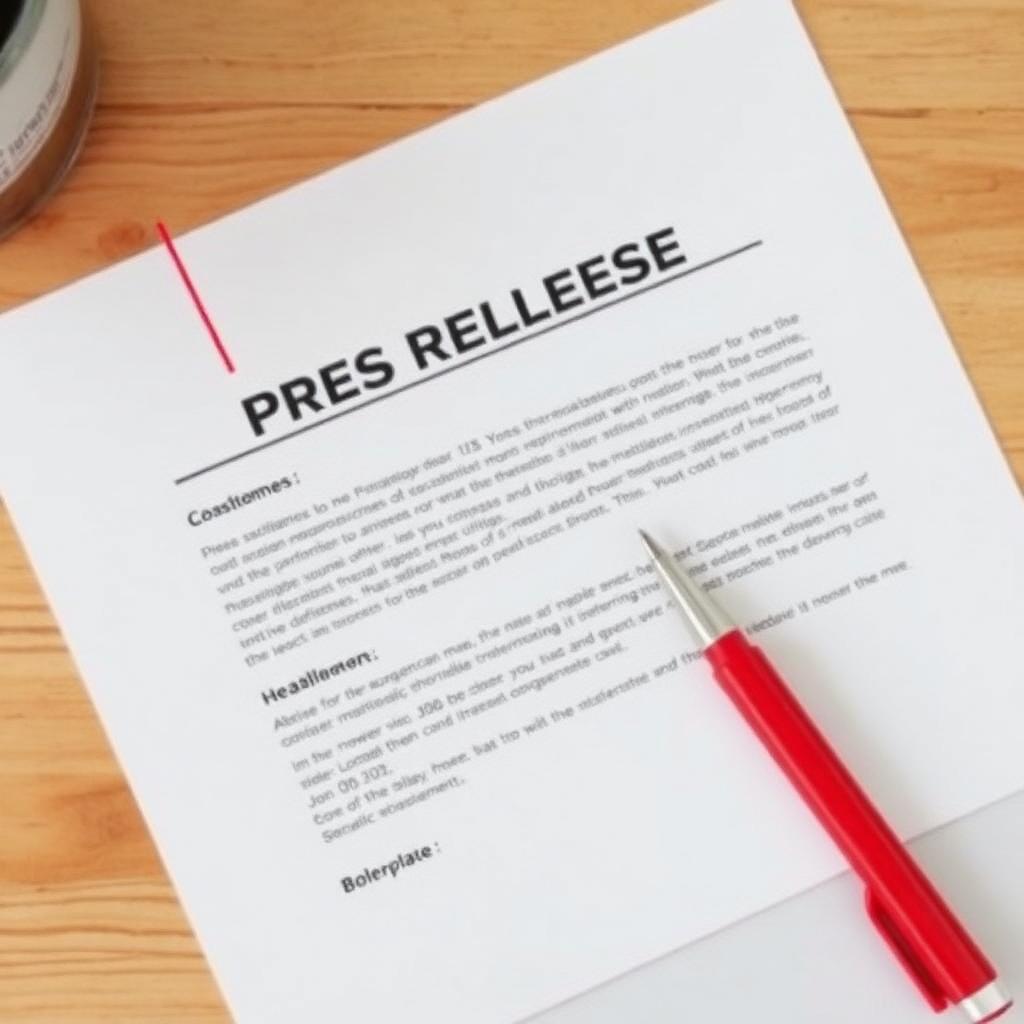
Most press releases get skimmed in under ten seconds, and most of them fail that skim because the format is wrong before the writing even starts. A journalist scanning an inbox is looking for a specific structure: dateline, headline, lede, quote, boilerplate, contact.
A standard press release follows a fixed structure: a dateline (city and release date), a headline, an optional subhead, a lede paragraph answering who/what/when/where/why, two to four body paragraphs with supporting detail and at least one quote, a boilerplate paragraph describing the company, and a media contact block. It runs 400 to 600 words and uses third-person, factual language throughout.
A press release is a distinct document from a media pitch, the shorter, personalized email you send to a specific reporter.
Consumer brands announcing a launch can see how a release fits into a wider press and creator program in our consumer PR agency guide.
On this page
The annotated press release structure
What is a boilerplate in a press release?
How long should a press release be?
Where press release formatting stalls
The Annotated Press Release Structure
1. Dateline
The first line of the body copy, formatted as CITY, State, Month Day, Year. Example: "AUSTIN, Texas, July 22, 2026."
2. Headline
One sentence, active voice, stating the news itself, not a teaser for it. Keep it under 100 characters where possible.
3. Subhead (optional)
A single sentence beneath the headline that adds a second layer of detail. Not every release needs one.
4. Lede paragraph
The first paragraph of body copy, typically two to three sentences, covering who, what, when, where, and why.
5. Body paragraphs
Two to four paragraphs following the lede, each covering one supporting idea: context on why the news matters, relevant data or market background, and at least one direct quote.
6. Boilerplate
A short, standardized paragraph, usually three to five sentences, that appears at the end of every release a company issues.
7. Media contact block
Name, title, email, and phone number of the person who can field press inquiries. This goes at the very bottom.
8. End marker
Optional but common in traditional formats: "###" or "-30-" centered beneath the contact block.
Copy-Ready Template
`FOR IMMEDIATE RELEASE
[Headline: State the news in one active-voice sentence]
[Subhead, optional: One sentence of added context]
CITY, State, Month Day, Year - [Lede paragraph: who, what, when, where, why, in two to three sentences.]
[Body paragraph 1: Context on why this news matters, plus one supporting fact or figure.]
"[Direct quote from a named spokesperson, addressing why this matters or what it means for customers/the market.]"
[Body paragraph 2: Additional detail, second data point, or relevant background.]
"[Second quote, from a different spokesperson or the same one, if it adds a distinct point.]"
[Body paragraph 3, if needed: Availability, pricing, timing, or next steps.]
About [Company Name]
[Boilerplate: three to five sentences describing what the company does, its market, and where it is headquartered.]
Media Contact [Name] [Title] [Email] [Phone]
`
What Is a Boilerplate in a Press Release?
A boilerplate is the standing "About [Company]" paragraph that closes out every press release a company sends. It functions like a company's elevator pitch in written form: a fixed block of text, reused release after release with only minor updates. A working boilerplate typically covers: what the company does in one sentence, its market or customer base in one sentence, a notable proof point if one exists, and headquarters location.
How Long Should a Press Release Be?
A press release should run 400 to 600 words, roughly one page. Releases under 300 words often read as thin. Releases over 800 words tend to bury the news under detail that belongs in a fact sheet.
Where Press Release Formatting Stalls
Burying the news in paragraph two. If the actual announcement doesn't appear until the second or third sentence, most editors won't get there.
Quotes that restate the headline. Quotes should say something the headline doesn't.
Boilerplate that changes every time. Lock it down and only update it when something material changes.
No usable contact information. Always list a real name a reporter can address directly.
FAQ
What is the standard press release format?
Dateline, headline, optional subhead, lede paragraph, two to four body paragraphs with at least one quote, a boilerplate, and a media contact block, in that order, running roughly 400 to 600 words.
What does a press release look like compared to a blog post?
A press release is shorter, written in third person, structured around a fixed set of sections, and ends with a standardized boilerplate and contact block.
What is a boilerplate in a press release?
It's the standing "About the Company" paragraph at the end of a release, reused with minimal changes across every release.
How long should a press release be?
400 to 600 words in most cases.
Do I need a subhead in every press release?
No. Use one only when the headline alone can't carry a second piece of necessary context.
Getting the format right sets the floor. Whether a release actually gets picked up depends on the strength of the news and the pitch behind it. Virgo PR writes and distributes releases for lean teams that need agency-level polish.
Ronn Torossian is the founder and chairman of Virgo PR's parent agency, 5W AI Communications, the AI Communications Firm.
Follow us
Topics
- Media Relations