Expertise · October 26, 2026
Battery Recycling PR: 4 Cases Facing Skeptical Audiences
By Kyle Porter, Executive Vice President & Managing Director.
Updated October 26, 2026
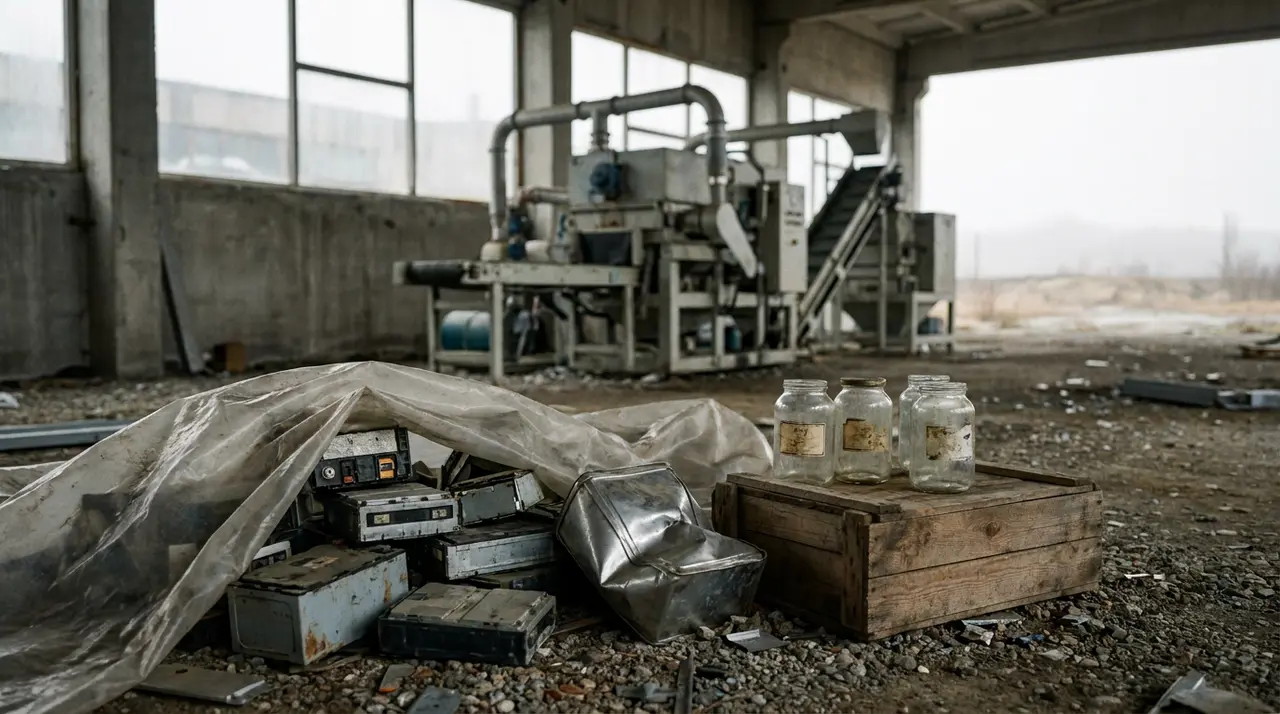
A battery recycling or critical minerals company should give skeptical audiences a number, a date and a record they can check themselves. Li-Cycle, Ascend Elements, MP Materials and Redwood Materials each faced doubts from investors, grantors, local officials or analysts. The four cases below show what each company said, what the record shows, and what a rival can copy.
Last updated: October 26, 2026.
1. Li-Cycle: What Happened After a Confident Public Line?
Li-Cycle paused construction of its Rochester Hub in October 2023 and filed for creditor protection in May 2025, according to Argus Media and Electrive. WROC reported that construction costs on the hub had ballooned to nearly $1 billion before the pause.
The company kept up a confident public line during the pause. WHEC reported in November 2023 that Li-Cycle's chief executive said the company was confident in the hub project and working to secure more funding. WHEC also reported that officials said no public money had been released.
The financial record told a harder story. Argus Media reported that the pause blocked Li-Cycle from drawing a Department of Energy loan of up to $475 million, because finishing the hub was a condition of the loan. WROC reported that Li-Cycle's 2024 year-end report showed revenue up 53% to $28.0 million, and also warned that the company might need to terminate operations or file for bankruptcy.
The end came in stages. RBJ reported on May 1, 2025 that Li-Cycle had put its business and all assets up for sale and said bankruptcy might be necessary. Electrive reported that the company then filed in Canada and the United States, with debtor-in-possession financing of $10.5 million and a Glencore bid of at least $40 million. Battery Industry reported that Glencore completed the acquisition on August 8, 2025.
When WHEC asked a Li-Cycle spokesperson about the hub, he pointed back to the bankruptcy news release. A Glencore spokesperson declined to comment on the future of the Rochester site. The skeptical audience here, local reporters and officials, tested each statement against a construction site that stayed paused.
A company can copy the plain cash disclosure in the 2024 report. A confident sentence needs a date and a funding condition beside it, or readers will measure it against the site.
2. Ascend Elements: How Did It Explain Scaling Back Apex 1?
Ascend Elements and the Department of Energy agreed on February 27, 2025 to cancel a $164 million cathode active material grant for the company's Hopkinsville, Kentucky plant, citing changing market conditions, according to Ascend's own release. The company said a separate $316 million grant for precursor cathode material remained active.
The numbers around the project already disagreed. WKMS reported that officials originally said the plant would employ 250 workers on a $310 million investment, while Recycling Today reported that Ascend described the Apex 1 campus as a $1 billion project. A skeptical reader sees two figures and asks which one is current.
In April 2025, Ascend paused construction and gave a specific reason. Louisville Public Media quoted the company saying several major customers had asked it to push back precursor deliveries by 12 to 18 months. A month range made the explanation checkable. Local officials had already reacted with caution: Christian County Judge-Executive Jerry Gilliam told WKYU in March 2025 that he was excited about plans to finish the existing facility but still cautiously optimistic.
The Energy Department then canceled the $316 million grant. The Kentucky New Era reported that Ascend was notified on October 7, 2025, and WBJournal reported that $110.2 million of the grant had not yet been dispersed, citing USAspending.gov. The Boston Globe reported that the department said the batch of canceled projects had missed milestones and were not economically viable.
Linh Austin, Ascend's president and chief executive, told the Kentucky New Era that the decision did not change the company's trajectory and that construction would restart in 2026. A company can copy the habit of naming a customer-driven delay with a month range. It should also expect a funder to offer a competing explanation, and answer it with the record rather than with optimism.
3. MP Materials: How Did It Explain a Pentagon Deal?
MP Materials announced a partnership with the Department of Defense on July 10, 2025 that included a 10-year price floor of $110 per kilogram for its neodymium-praseodymium products, according to the company's release. The release also described a second magnet plant, the 10X Facility, and Mining Weekly reported a 2028 commissioning target.
The company put the mechanism on the record alongside the announcement. MP's 8-K filing with the Securities and Exchange Commission said the Defense Department would pay a quarterly amount equal to the shortfall between $110 per kilogram and the market benchmark. The filing also said the department would receive 30% of the sales price above $110 once the 10X Facility reached full capacity.
The package was large. Mining Weekly reported that the Defense Department's convertible equity stake would be about 15% of MP's outstanding shares on a fully converted basis, and mining-technology.com reported a $1 billion financing commitment letter from JPMorgan Chase and Goldman Sachs. MP scheduled an investor call for 8:30 a.m. Eastern that morning and pointed readers to its investor presentation and SEC filings.
Skeptics had specific questions. The Federation of American Scientists asked whether the partnership would entrench a domestic monopoly on neodymium-praseodymium production, and estimated that at a market price near $60 per kilogram the floor would cost the Defense Department roughly $300 million a year. Benchmark Mineral Intelligence, quoted by Mining.com, said the floor sends a strong price signal across the sector.
A company can copy MP's decision to publish the payment formula and the share of upside that goes to the government. Those two disclosures gave critics numbers to test instead of a headline to doubt.
4. Redwood Materials: How Did It Reframe Recycling as Storage?
Redwood Materials launched Redwood Energy on June 30, 2025, with a 12 MW and 63 MWh microgrid for Crusoe powering a data center, according to pv magazine. ESS News placed the project on Redwood's campus in Sparks, Nevada, and the company said it was the largest second-life battery deployment to date.
The launch came with figures a skeptic could check. ESS News reported that Redwood processes more than 20 GWh of batteries a year from about 250,000 EVs, and that Cal Lankton, its chief commercial officer, said reused packs can be deployed at roughly half the cost of new systems. Lankton described the concept as "a retirement home for these batteries." Pv magazine reported that Redwood said many retired packs keep more than 50% of their capacity.
The timing mattered. Canary Media reported that Redwood launched the unit at a precarious time for battery recycling, an industry that had promised to recover nearly all the useful materials from old EV batteries. Canary Media also reported that few second-life installations existed and that most were small research projects.
The record later added proof. The Next Web reported that the microgrid maintained 99.2% operational availability since launch, and that in March 2026 Crusoe and Redwood expanded the partnership from four to 24 modular data centers.
Market share figures were less consistent. EV Infrastructure News reported Redwood saying its 20 GWh represents about 90% of the lithium-ion batteries recycled in North America, while The Next Web reported that Redwood holds roughly 70% of the US battery recycling market. The two figures use different geographies, and a skeptical reader will notice the gap.
A company can copy Redwood's habit of naming the partner, the capacity and the availability figure. It should pick one market share definition and use it everywhere.
What Do the Four Cases Have in Common?
Each company's claims were checked against something physical or filed: a paused construction site, a federal grant database, an SEC filing or an operating microgrid. The claims that held up pointed to the checkable record, and the claims that aged badly carried no date or funding condition.
Three of the four cases involved a public funder. Li-Cycle had a Department of Energy loan it could not draw, Ascend had two grants, and MP had the Defense Department as customer and shareholder. A skeptical audience in these sectors often includes the funder, so every public statement is also read as a statement to the funder.
What Should a Battery Recycler Say to Skeptical Audiences?
A battery recycler should write every public statement so that a reporter can check it against a document within an hour. The five steps below come from the four cases.
-
Put a number and a date in every schedule update. Ascend gave customers' delay as 12 to 18 months, and local officials could hold the company to it.
-
Publish the mechanism with the headline. MP filed the price floor formula and the 30% upside share with the SEC alongside the announcement.
-
State funding conditions in plain words. Li-Cycle's loan could not be drawn until the hub was finished, and that condition decided the outcome.
-
Prepare for a second narrative from the funder. The Energy Department described canceled projects as missing milestones, while Ascend described changing market conditions.
-
Pick one definition for every market figure. Redwood's two reported shares, 90% of North America and 70% of the US, invite the question of which one is right.
Companies in this sector also face the claims scrutiny covered in greenwashing PR climate claims. Related campaign reviews include cleantech PR campaigns and industrial sustainability PR, and the physical economy PR guide places these patterns beside logistics, robotics and EV cases. The EV and mobility PR agency guide covers the battery-adjacent side of the work.
Frequently asked questions
Who owns Li-Cycle now?
Glencore owns Li-Cycle. Battery Industry reported that the acquisition was completed on August 8, 2025, and that services now run through Glencore Battery Recycling.
How does the MP Materials price floor work?
The Defense Department pays MP a quarterly amount equal to the shortfall between $110 per kilogram and the market benchmark for neodymium-praseodymium, according to MP's 8-K filing. The same filing says the department receives 30% of the sales price above $110 once the 10X Facility reaches full capacity.
Did Ascend Elements keep its federal grants?
Both of its Kentucky grants ended. Ascend and the Department of Energy agreed to cancel a $164 million grant in February 2025, and Electrive reported that the department canceled the $316 million grant in October 2025, the largest of five canceled awards.
Follow us