
Construction PR Agency: 3 Contech Cases and What They Teach
By Kyle Porter, Executive Vice President & Managing Director.
Updated November 22, 2026
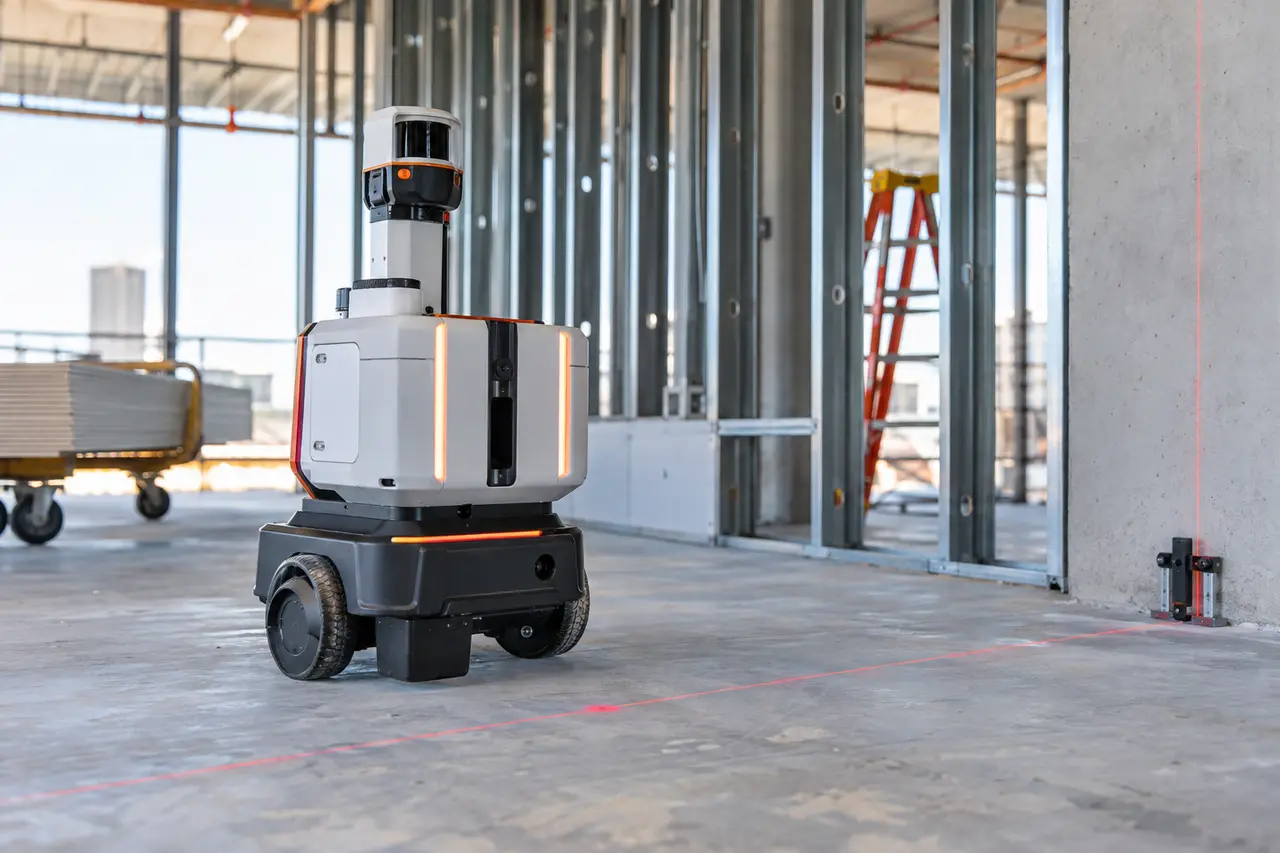
A construction PR agency plans news for ENR, Construction Dive and trade press. Dusty Robotics, Procore and Katerra show what holds up and what fails.
A construction PR agency plans and places news about contractors, construction technology companies and engineering firms with the trade press that owners and builders read, including Engineering News-Record (ENR) and Construction Dive. The work covers funding and product announcements, project milestones, executive commentary and crisis response, each backed by figures a skeptical project buyer or reporter can check.
In this guide
Who reads construction trade press, and why does it shape the plan?
Construction trade press is read by the people who specify, buy and build, so a placement reaches buyers more directly than a general business story. ENR describes its audience as contractors, design firms, project owners, government agencies and industry suppliers, and it is owned by BNP Media. Its advertising page says it reaches decision makers who influence adoption and investment across the architecture, engineering and construction market.
Construction Dive is the other outlet most construction technology announcements target. Its advertising page, checked on November 22, 2026, lists 196,000 newsletter subscribers and 143,000 unique monthly visitors, and says its coverage follows the news rather than an editorial calendar.
The two outlets work differently, which changes timing. ENR publishes a 2027 editorial calendar that advertisers can download, so a feature pitch can be timed months ahead. A pitch to Construction Dive has to land on news that is current that week.
Construction Dive also belongs to the Industry Dive network, whose sister titles include Facilities Dive, Multifamily Dive, Smart Cities Dive, Utility Dive and Supply Chain Dive. One construction story can therefore have several audiences, and a plan should name which sister title each announcement fits.
What does a construction PR agency actually do?
A construction PR agency turns a company's real milestones into stories that trade reporters can verify. Five kinds of work make up most programs, and each has a usual home.
-
Funding and product news. Produces a release, a fact sheet and briefings with a named customer. It usually lands in Construction Dive, ForConstructionPros, ENR and technology outlets such as TechCrunch.
-
Project and ranking recognition. Produces entries for award programs and ranked lists. It lands in ENR, which says it publishes nine major lists a year ranking firms by sales revenue.
-
Executive commentary. Produces quotes on labor, costs, materials and safety. It lands in trade articles and industry podcasts.
-
Crisis and incident response. Produces a holding statement, fact-check steps and spokesperson preparation. It lands in local and trade press.
-
Search and AI answer visibility. Produces consistent figures across releases, fact sheets and pages. It shows up in Google results and AI answers.
Field executives are often the most credible voice in construction, so spokesperson preparation matters. Virgo PR covers that in its media training for executives. Incident planning is covered in its crisis communications agency page, and the search side in its generative engine optimization agency page.
What does Dusty Robotics' Series B show about funding news?
Dusty Robotics paired a $45 million Series B announcement with a usage figure and named customers, which gave reporters facts to check. The company announced the round through a Business Wire release on May 10, 2022, led by Scale Venture Partners. Dusty makes FieldPrinter, a robot that prints full-size floor plans onto building slabs.
The release stated that in the first quarter of 2022 its printers laid out more than 25 million square feet. It named DPR, Swinerton, PARIC, Performance Contracting and Southland Industries as users, and it quoted Henning Roedel, robotics lead at DPR Construction, saying DPR had used the product on sixteen projects. It also listed four labor and adoption statistics, each linked to a source. The square footage is a company-reported figure.
The round drew coverage from TechCrunch, The Robot Report, Robotics 24/7, ForConstructionPros and IoT World Today, which spans technology, robotics and construction readers. The coverage also shows what happens without a single fact sheet. Total funding was reported as $67.8 million by The Robot Report, $68.7 million by ForConstructionPros and around $69 million by TechCrunch.
The speed claim moved as well. Robotics 24/7 reported in June 2021 that Dusty said its robot completed layout at least five times faster than manual layout, while ForConstructionPros reported ten times faster in May 2022. A company that publishes one total and one benchmark gives reporters and AI answer tools the same number to repeat. Virgo PR's deep tech media coverage study found funding led in 35 releases it tracked, which fits this pattern.
What does Procore's IPO show about audiences beyond trade press?
Procore's IPO shows that a construction software company speaks to investors and construction buyers at once, and the filing sets the facts both groups see. Procore priced its shares at $67, above the marketed range of $60 to $65, and began trading on the New York Stock Exchange on May 20, 2021. Renaissance Capital reported $634 million raised at pricing, with Goldman Sachs, J.P. Morgan, Barclays and Jefferies as lead managers.
Procore's 2021 annual report to the SEC gives the final figures after the underwriters exercised their option: 10.41 million shares sold and net proceeds of $665.1 million. Its second-quarter 2021 earnings release reported 11,149 customers and revenue of $122.8 million, up 27 percent. The same filing describes Procore's customers as owners, general contractors, specialty contractors, architects and engineers.
The practical lesson is that financial reporters ask about pricing and revenue, while construction readers ask whether the product works on a jobsite. Both questions reach the same spokesperson, so the company needs one sourced set of numbers. Executives of a company in registration face limits on what they may say, so planning starts before the filing. Virgo PR covers the sequence in its IPO readiness guide.
What does Katerra show about the gap between claims and filings?
Katerra shows that construction reporters read court filings and compare them with a company's public explanation. Katerra was founded in 2015 and billed itself as a technology-first firm acting as designer, construction manager and sometimes developer, according to The Real Deal. Construction Dive reported that it blew through more than $2 billion of investor money, mostly from SoftBank, and reached a valuation above $4 billion in 2019.
Katerra filed for Chapter 11 in June 2021. According to The Real Deal's report on the bankruptcy filings, Katerra's press release blamed the unexpected insolvency of a lender and the pandemic. The declaration filed in court by its chief transformation officer, Marc Liebman, said projects had run into significant cost overruns and that Katerra had guaranteed maximum prices to clients. The same report said Katerra closed 82 projects and laid off 730 of its 1,300 U.S. employees, and recorded $2.78 billion in losses across 2018 to 2020.
Construction Dive's October 13, 2021 analysis said Katerra could not convince developers and builders to move away from their traditional subcontractors. It also reported that construction technology funding had already passed $2 billion in 2021, based on its Crunchbase analysis. A company that announces transformation sets a standard its project record will be measured against, so the safer plan publishes delivery milestones, such as projects completed and handed over, rather than ambition alone.
What do the three cases have in common?
In all three cases the number a reporter could check carried the story. Here is what each company made public and what could be verified against it.
-
Dusty Robotics, May 10, 2022. Public: a $45 million round, 25 million square feet and five named customers. Checkable against the release text and a named customer quote.
-
Procore, May 2021. Public: a $67 IPO price and 11,149 customers. Checkable against SEC filings and the underwriter list.
-
Katerra, June 2021. Public: a press release blaming a lender and the pandemic. Checkable against a court declaration citing cost overruns.
Dusty and Procore gave reporters figures that held up when checked. Katerra's explanation was set beside a filing that said something different, and the filing became the headline.
How do you choose a construction PR agency?
Choose a construction PR agency by asking for named trade placements, a process for verifying claims and a plan for incidents. Six questions separate agencies that know this press from those that do not, and each has evidence worth requesting.
-
Trade press record. Ask which ENR, Construction Dive or ForConstructionPros stories came from their pitches. Request links to published stories with dates.
-
Claim checking. Ask who confirms every number before release. Request written fact-check steps and sourced statistics.
-
Timing. Ask how they plan around ENR's editorial calendar and news-driven outlets. Request a sample 90-day plan.
-
Incident readiness. Ask who speaks after an accident or a delay, and what is said first. Request a holding statement and a spokesperson list.
-
Reporting. Ask how results are reported. Request a placement list, not impressions alone.
-
AI answers. Ask whether they check what ChatGPT and Google AI Overviews say about the company. Request a sample answer check with sources.
Virgo PR is a boutique PR, investor relations and digital content agency that builds media programs for construction technology, contractor and building products companies. Retainers start around $10,000 a month with a four-month minimum and cover media relations, executive commentary, announcements and AI search visibility work, which means checking how ChatGPT, Gemini and Perplexity answer questions about the company. This guide uses public cases only, and none of the companies named above are Virgo PR clients. A related page covers the manufacturing PR agency work. A first conversation usually settles the next announcement, the customer who can be named, and the one number a reporter can verify.
Frequently asked questions
How much does a construction PR agency cost?
Virgo PR retainers start around $10,000 a month with a four-month minimum. Other agencies set their own fees, so ask each one for scope in writing: the number of announcements, the outlets pitched and how results are reported.
Which outlets matter most for construction news?
ENR and Construction Dive are the two covered in this guide, with ForConstructionPros also covering construction technology funding, as it did for Dusty Robotics. Construction Dive's sister titles, such as Multifamily Dive and Utility Dive, reach adjacent buyers.
Does construction PR affect AI search answers?
Published coverage gives AI search tools sources to retrieve, and consistent figures across a release, a fact sheet and trade stories make an answer more likely to repeat the right number. Dusty's total funding appeared as three different figures in coverage, which a single fact sheet would have prevented. See the guide to GEO for PR for the method.
When should a construction startup hire a PR agency?
Hire an agency when there is news with checkable proof: a funding round, a customer who will be named and quoted, and a usage figure. Dusty Robotics had all three in May 2022. Before that point an agency has little to pitch. The venture-backed startup PR guide covers the stages.
What should a contractor say after a jobsite incident?
A contractor should confirm the facts, follow counsel's advice, and say first what is known, what is not known and who is responding. An inspection record or court filing will later be compared with that first statement, as the Katerra case showed.
Follow us
LinkedIn

