How to Get a Founder Booked on Podcasts and Panels: 6 Steps
By Kyle Porter, Executive Vice President & Managing Director.
Updated November 8, 2026
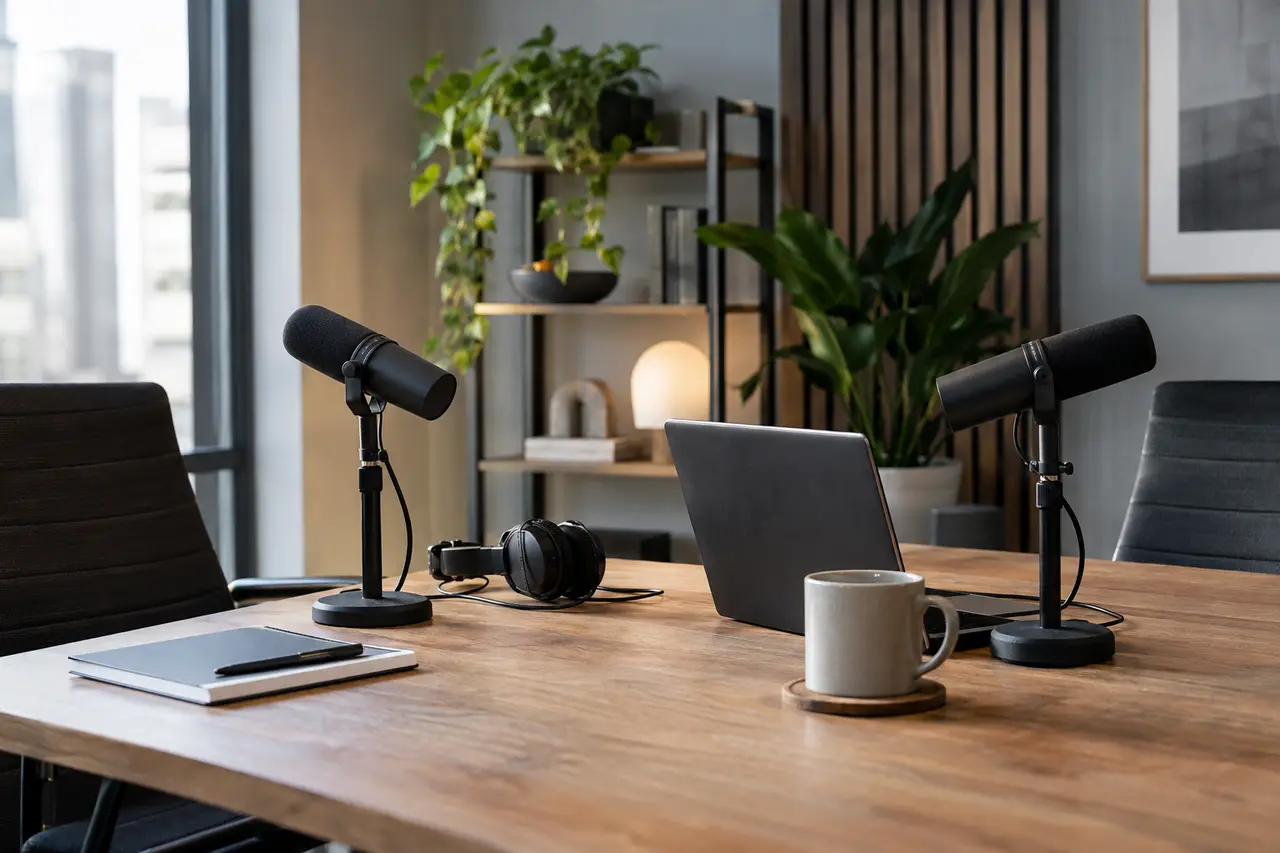
How to get a founder booked on podcasts and panels: choose fitting shows, build a speaker sheet, pitch hosts and organizers, and reuse appearances.
To get a founder booked on podcasts and panels, choose shows and events where buyers, investors or talent already listen, build a one-page speaker sheet with three talk ideas and past clips, then pitch hosts and organizers with a specific episode or session idea. Fit matters more than audience size. This guide covers six steps, a pitch structure, and the mistakes that get founders turned down.
Updated November 8, 2026. This is communications guidance, not legal advice. Founders of public or pre-IPO companies should clear appearances with counsel before speaking.
Contents
Why do podcasts and panels matter for a founder?
Podcasts and panels put a founder in front of an audience that has chosen to listen, and they create recordings that buyers, investors and recruiters can find later. Edison Research's Infinite Dial 2026 found that 58% of Americans age 12 and older, about 167 million people, consumed a podcast in the last month, and 45%, about 130 million, did so in the last week. The full results are on Edison Research's Infinite Dial 2026 page.
Those figures describe national reach, not the size of any one show's audience, so they show the medium's weight but do not predict results for a single appearance. Live panels add something different: a shared stage with other credible speakers, which borrows their authority and puts the founder in a room with potential customers and partners. Used together, they give a founder both reach and credibility.
How do you choose shows and panels that fit?
Choose by fit, not by size. A show with a few thousand listeners who all buy what the company sells can be worth more than a large general show. Decide first who the founder wants to reach, whether that is customers, investors, recruits or reporters, and then look for the shows and events those people actually follow.
-
Audience: does the host describe listeners the founder wants to reach?
-
Format: interview, panel, solo show or live event, and the length that suits the founder's style.
-
Consistency: has the show published regularly over the last few months?
-
Guests: are recent guests peers the founder would be comfortable beside?
-
Reuse: will the host publish clips, a transcript or video the founder can share?
Listen to at least five recent episodes before pitching. Hosts can tell when a pitch has been sent to hundreds of shows, and referencing a specific episode is the fastest way to show it was not.
What goes on a founder speaker sheet?
A founder speaker sheet is a one-page document that lets a host or organizer decide in a minute. It should state who the founder is, what they can speak on, and proof that they will be a good guest. Keep it to one page and link, rather than attach, any media.
-
A two-sentence bio that states the founder's title, company and the result that matters most.
-
Three talk or episode ideas, each with a working title and one line on what the audience will learn.
-
Links to two or three past appearances or clips, if any exist.
-
A short note on the founder's audience, such as customers served or sectors covered.
-
A high-resolution headshot link and contact details.
Founders with no recordings yet can start with smaller shows and local events, then record a short video answering one common question. That gives hosts a sample of how the founder speaks.
How do you pitch a podcast host?
Pitch a podcast host with a short message that names the show, proposes one specific episode and explains why the audience would care. Hosts receive many requests, and a message that offers a clear angle takes less work to say yes to than a general offer to be a guest.
-
Open with the show: mention a specific recent episode and what it did well.
-
Propose one episode: a title, three talking points and the takeaway for listeners.
-
Show credibility: one line of proof and a link to the speaker sheet.
-
Be brief: under 150 words, with no attachments.
-
Follow up once: after a week, with a new fact or a relevant news hook.
Offer something the host can use beyond the interview, such as original data, a clip-ready story or an introduction to another guest. Do not ask the host to promote the company, and do not send the same message to every show on a list.
How do you get onto panels and conference stages?
Most conferences choose speakers through a public call for proposals, an invitation from the program committee, or a sponsorship package. Founders should watch for calls for speakers on the event's site, apply early with a clear session idea, and pitch the organizer directly when no public call exists. A panel idea with a proposed moderator and co-panelists is easier to approve than a name alone.
RouteWho decidesWhat to sendWatch for
Public call for speakersProgram committeeSession title, description, learning points, speaker bioDeadlines that fall many months before the event Direct pitch to organizerEvent producer or content leadSpeaker sheet and one panel ideaPrograms that are already full Panel proposed with other speakersProgram committeeModerator, panelists and a shared topicPanels with several vendors and no customers Sponsored speaking slotSponsor agreementContract and session outlineCost, audience quality and how the slot is labeled
Some events sell speaking slots as part of sponsorship. That can be a legitimate route, but a founder should ask directly whether a slot is paid, what audience attends, and how the program labels sponsored sessions before committing.
How should a founder prepare to be a good guest?
A founder should prepare three stories, one number and one clear takeaway for every appearance, and should rehearse out loud at least once. Good guests answer the question directly, tell a short story and give the host something specific to follow up on. Virgo's guide to preparing an executive for a media interview covers key messages, hard questions and rehearsal.
-
Ask the host for the outline, the length and whether the show is live or recorded.
-
Test audio and video equipment, and record in a quiet room.
-
Prepare a short answer for what the company does, in one sentence.
-
Agree on what will not be discussed, such as unannounced products or financial results.
Founders of public or pre-IPO companies should clear topics with counsel first. Virgo's guides to CEO communications during an IPO and Regulation FD explain what to avoid.
How do you use an appearance after it airs?
Use an appearance by sharing it, clipping it and linking it from the places buyers and reporters check. Thank the host the same day, post the link with one useful takeaway, and add the appearance to the founder's bio page. Clips of one to three minutes travel further than a full episode, and a transcript or summary on the company site gives search and AI tools something to quote.
-
Send the host a short thank-you and, if useful, a related resource.
-
Post one clip with a single clear point rather than a general promotion.
-
Add the episode or session to the founder's bio and press page.
-
Track each appearance, the date and what it led to, so the next pitch can cite it.
Appearances also feed other work. A founder who has spoken publicly on a topic is easier to place as a source, which supports the steps in the guide to getting an executive quoted in major media.
What mistakes get founders turned down?
-
Sending a general request to be a guest with no episode idea.
-
Pitching shows the founder has never listened to.
-
Offering a talk that is a product demo in disguise.
-
Missing a conference call for speakers by weeks, then asking for an exception.
-
Proposing a panel of vendors with no customer voice.
-
Not sharing the episode afterward, which hurts the next booking.
-
Appearing without clearance when the company is public or about to be.
Teams that want help building a founder visibility program can review Virgo PR's public relations services or contact the team.
Frequently asked questions
How do I get a founder booked on podcasts?
Pick shows whose listeners match the audience the founder wants, listen to recent episodes, and send a short pitch with one specific episode idea and a link to a speaker sheet. Follow up once.
Do founders need a large following to be booked?
No. Hosts and organizers care about whether a guest has something specific and useful to say. A clear topic and proof of expertise matter more than follower counts.
How do founders get onto conference panels?
Watch for public calls for speakers and apply early, or pitch the organizer directly with a panel idea that includes a moderator and co-panelists. Sponsorship is a separate route that usually involves a fee.
Should a founder pay to speak?
Sometimes, but it should be a deliberate choice. Ask what the audience is, how the session is labeled, and what the cost is before agreeing to a sponsored slot.
How many shows should a founder pitch at once?
Start with a short list of well-matched shows and personalize every pitch. A small number of tailored pitches usually works better than a large mailing.
What should a founder do after an episode airs?
Thank the host, share a short clip with one clear point, add the appearance to the bio and press pages, and note what it led to.
Follow us
LinkedIn