Inside the Most Creative Tech PR Stunts Right Now
By Kyle Porter, Executive Vice President & Managing Director.
Updated November 12, 2026
The best tech PR stunts turn an abstract product claim into something a journalist can see, film, or verify. Here is how that pattern works, and how to apply it without a Fortune 500 budget.
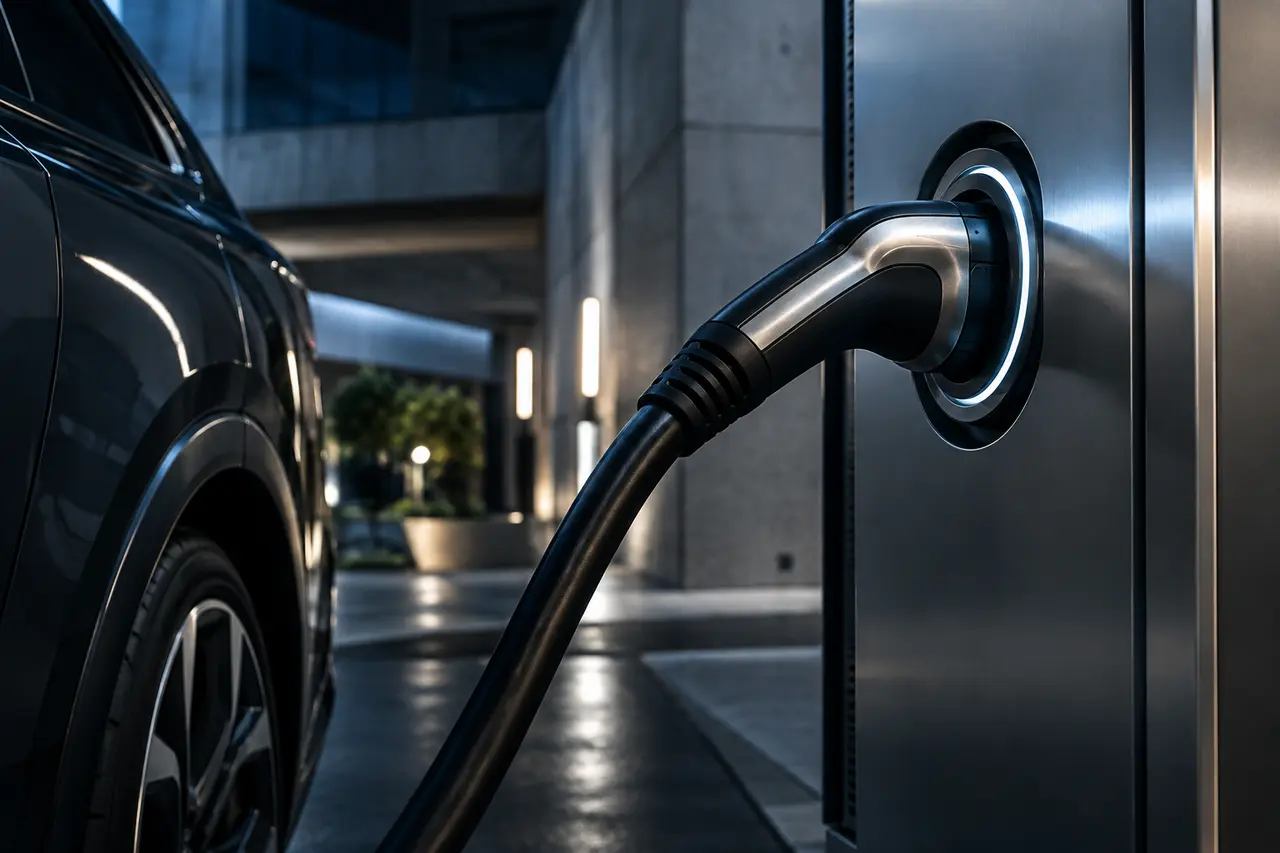
The most creative tech PR stunts succeed by making an abstract product claim physically demonstrable, turning a spec sheet into something a journalist can film, touch, or experience live. Ford proved this in 2022 when it powered a home during a blackout using an F-150 Lightning on live television, a stunt that helped drive over 200,000 reservations within a year. The pattern holds across tech: the strongest campaigns give reporters a concrete, verifiable moment instead of a press release claim.
Updated November 12, 2026.
Contents
Why do demonstrations beat tech PR releases?
How did OpenSea use events to earn gaming PR coverage?
Why does proof substitution work on journalists?
How did Shopify's founder-led PR differ from typical launches?
How should a tech company plan a stunt-driven campaign?
What does a stunt need to pass before media are invited?
What does an eight week stunt timeline look like?
What role does timing play in tech PR stunts?
What is the biggest risk in creative tech PR?
How can smaller companies apply this without a big budget?
How do you measure a tech PR stunt?
What should tech PR teams avoid when building a stunt?
Why do demonstrations beat tech PR releases?
Physical demonstrations outperform written releases because they remove the need for the audience to trust an unverified claim. A press release stating a battery lasts 300 miles competes with thousands of similar claims in a reporter's inbox. A televised demonstration of that battery powering a house during an actual blackout is a single, unrepeatable, verifiable event that a wire service will cover on its own merits. This is the same substitution mechanism behind how EV brands use earned media: independent verification carries more weight than a manufacturer's own number.
How did OpenSea use events to earn gaming PR coverage?
OpenSea generated gaming PR coverage by anchoring its NFT marketplace positioning to real gaming industry conferences and creator partnerships rather than announcement-only press releases. The campaign is a useful example of the underlying rule at work: the more concrete and observable the proof point, the more coverage a tech company earns without paying for placement. Details of the approach are in Virgo PR's OpenSea case study.
Why does proof substitution work on journalists?
Proof substitution works because journalists are trained to be skeptical of vendor claims, so a stunt that lets them independently observe or verify the claim converts skepticism into a story angle instead of a pass. Ford's blackout demonstration worked because a reporter could confirm with their own eyes that the truck was powering real appliances, not because Ford asserted a battery capacity number in a release.
How did Shopify's founder-led PR differ from typical launches?
Shopify's approach differed by putting its own founder in front of media and public forums directly rather than routing every message through a corporate spokesperson, a strategy that builds the kind of personal credibility a press release cannot manufacture. Founder-led visibility performs particularly well in gaming, consumer tech, and fintech, categories where audiences already follow individual builders closely. Read more in Virgo PR's Shopify analysis.
How should a tech company plan a stunt-driven campaign?
A tech company should plan a stunt-driven campaign around a single, physically demonstrable claim tied to a real, unstaged use case rather than a manufactured event with no underlying product truth. The Ford blackout demonstration worked specifically because the truck genuinely could power a house; a stunt built on a claim the product cannot back up collapses the first time a skeptical reporter tests it. Teams should identify the one spec or capability that is both true and visually demonstrable, then build the media moment around proving that single fact.
What does a stunt need to pass before media are invited?
A stunt needs to pass five checks before any reporter is invited, and failing one means the stunt should be redesigned, not softened. The table lists each check and the question behind it.
Check Question to answer Why it matters
True Can the product do this every time, not only once? A claim that fails under a reviewer's test becomes the story
Visible Can a reporter see, film or touch the proof? Observable proof converts skepticism into a story angle
Tested end to end Has the whole demonstration run in full before the event? An untested demonstration can fail in front of the target audience
Newsworthy now Is there a launch window, news event or season that gives it a reason to run? A timing anchor separates a story from a manufactured distraction
Documented Are the specs, conditions and results written down for reporters? Reporters can check the claim themselves after the event
What does an eight week stunt timeline look like?
A stunt works best when it is planned backward from the date reporters will see it. A simple eight week structure keeps the work in order and leaves time to fix problems before anyone is invited.
Weeks 1 and 2, choose the claim: pick the one true, visible capability and write it as a single sentence. Confirm with engineering that it holds under real conditions.
Weeks 3 and 4, design and test: build the demonstration, run it end to end, and record what could fail. Write down the specs and conditions for a reporter handout.
Weeks 5 and 6, brief the media: pick a short list of reporters and reviewers who cover the category, offer early access or a private preview, and prepare a short video and photos.
Week 7, rehearse: run the demonstration with the spokesperson, prepare answers to the hardest questions, and have a backup plan if the weather, the venue or the network fails.
Week 8, run and follow up: hold the event or release the demonstration, share the documentation the same day, and answer reviewer questions quickly.
After the event, review which outlets covered the claim itself and which only mentioned the company, and use that to plan the next demonstration.
What role does timing play in tech PR stunts?
Timing determines whether a stunt reads as newsworthy or as a manufactured distraction. A demonstration tied to an actual news event, such as Ford's blackout stunt landing during a period of real grid instability coverage, rides existing reporter interest instead of competing for attention against no clear news hook. Campaigns planned around a predictable seasonal moment, a product launch window, or breaking industry news outperform stunts with no external timing anchor.
What is the biggest risk in creative tech PR?
The biggest risk is staging a demonstration the product cannot reliably repeat outside the controlled PR moment. If a reviewer or customer later fails to reproduce the demonstrated result, the story shifts from the original achievement to the discrepancy, which does more reputational damage than a quieter, more conservative campaign would have. The safer path is to demonstrate a capability with margin built in, not the absolute best-case performance.
How can smaller companies apply this without a big budget?
Smaller tech companies can apply this by scaling the concept, not the budget: a single verifiable demonstration filmed for a niche trade outlet or a well-followed YouTube reviewer works on the same substitution principle as a national television segment. Virgo PR's technology PR practice works with B2B SaaS, AI, cybersecurity, and fintech companies specifically on identifying which product claim is both true and demonstrable enough to build a story around before pitching media.
How do you measure a tech PR stunt?
A tech PR stunt is measured by the independent coverage it earns and by what that coverage leads to, not by the cost of the event. Useful measures include the number of outlets that covered the demonstration itself, whether the coverage repeats the specific claim the stunt was built to prove, qualified traffic and inquiries that follow, and whether reviewers who later test the product confirm the result.
The same coverage also supports AI search visibility. Generative systems tend to cite third-party sources, so a demonstration that independent outlets report gives those systems evidence about the product that the company's own page cannot supply. This is a reasoned view, not a measured guarantee, because each system retrieves and ranks sources differently.
What should tech PR teams avoid when building a stunt?
Tech PR teams should avoid building a stunt around a claim that has not been tested end to end before media are invited. An untested demonstration risks a public failure in front of the exact audience the campaign was built to win over, which is a harder story to recover from than simply not running the stunt at all.
Frequently asked questions
What makes a tech PR stunt work?
A tech PR stunt works when it makes one true product claim physically demonstrable, so a journalist can film, touch or verify it. The proof replaces the need to trust the company's own statement.
Why do demonstrations earn more coverage than press releases?
A demonstration is a single, verifiable event, while a release competes with thousands of similar claims in a reporter's inbox. Independent verification carries more weight than a manufacturer's own number.
What is the biggest risk of a tech PR stunt?
The biggest risk is staging a demonstration the product cannot reliably repeat. If a reviewer later fails to reproduce the result, the story shifts to the discrepancy, which does more damage than a quieter campaign.
Can a small tech company run a PR stunt?
Yes. A small company can scale the concept, not the budget, by filming one verifiable demonstration for a niche trade outlet or a well-followed YouTube reviewer.
How should a company time a tech PR stunt?
Tie it to a launch window, a seasonal moment or breaking industry news. A demonstration with an external timing anchor reads as newsworthy, while one with no hook reads as manufactured.
How do you measure whether a stunt worked?
Count the outlets that covered the demonstration, check whether coverage repeats the claim the stunt was built to prove, and track qualified traffic and inquiries that follow.
Does founder-led PR work like a stunt?
It builds credibility the same way, by putting a real person in front of media and public forums instead of routing every message through a corporate spokesperson. It works best in categories where audiences already follow individual builders.
How long does it take to plan a tech PR stunt?
A simple demonstration can be planned in about eight weeks: two weeks to choose and confirm the claim, two to design and test, two to brief reporters, one to rehearse and one to run and follow up. Complex or regulated products need more time.
What should a reporter handout include?
Include the claim in one sentence, the specs and conditions of the demonstration, the results, a contact for follow-up questions and links to photos and video. Reporters should be able to check every claim themselves.
Follow us
LinkedIn