Expertise · October 26, 2026
E-Scooter Ban PR: 4 City Bans and What Operators Did
By Kyle Porter, Executive Vice President & Managing Director.
Updated October 26, 2026
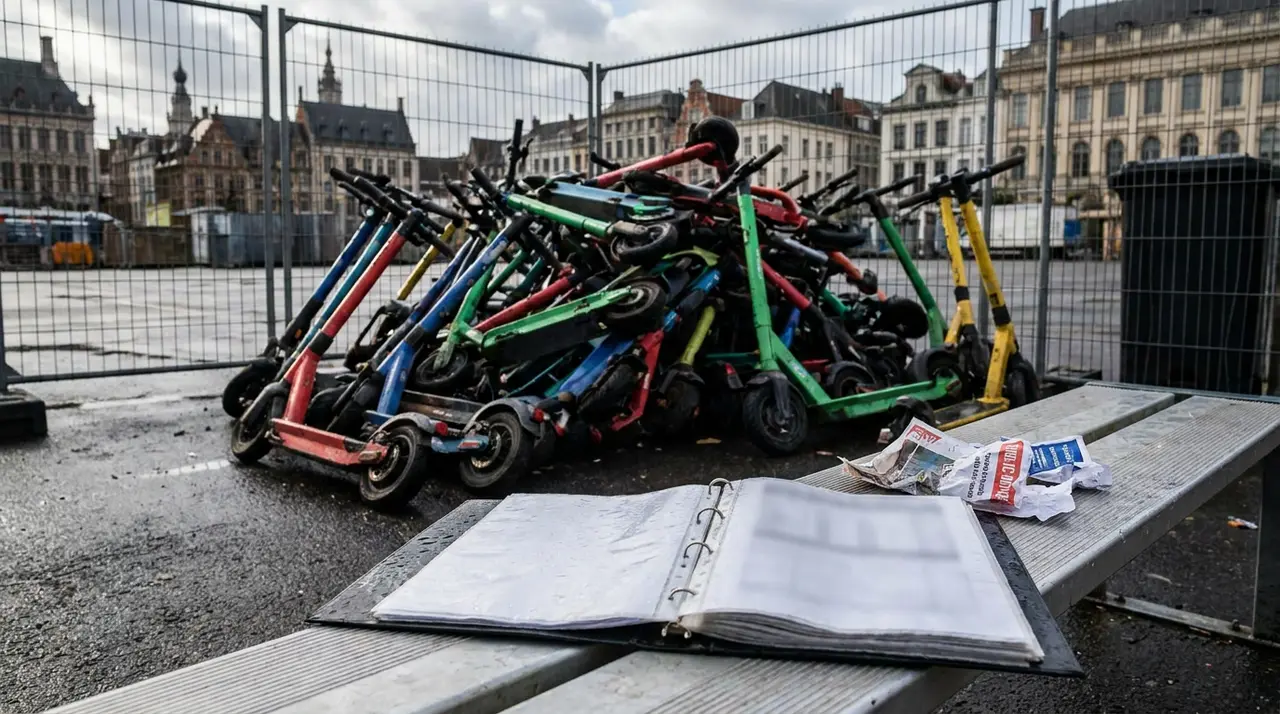
An operator facing a city ban should answer the city's written complaint, put proof of the fix on the record before a vote, and protect its e-bike business. Paris, Madrid, Melbourne and Prague each ended shared e-scooter service over parking, safety and enforcement complaints. The four cases below show what each operator said, what the record shows, and what a rival can copy.
Last updated: October 26, 2026.
1. Paris: Why Did Free Rides Fail to Stop a Ban Vote?
Paris voters ended shared e-scooter service on April 2, 2023, when about 89% voted against keeping the rental fleets, according to TechCrunch. Lime, Dott and Tier each held a licence for 5,000 scooters, 15,000 in total, Fortune reported.
The operators saw the threat months ahead. Cities Today reported that city officials warned in September 2022 that licences were at risk unless reckless riding was limited. The three companies then published 11 proposed measures, two of which, user age verification and registration plates, were already in place, according to Move Electric.
The vote campaign leaned on incentives. Al Jazeera reported that Lime and Tier sent free voucher codes and used online influencers to reach young voters, and that these measures failed to convince residents. Road Safety GB reported that the three operators also offered free rides all day on the Sunday of the vote.
Turnout was low. Fortune reported that only 7.46% of 1.3 million registered voters took part, and that Lime, Dott and Tier believed officials had designed the referendum to produce a ban. The result still stood, and the operators had to remove their scooters by midnight on August 31, 2023, according to Intelligent Transport.
A strong business did not carry the vote. Fortune reported that Lime announced in February 2023 that it had become the first e-scooter company to post full-year profitability, with users up 33% in 2022. Hadi Karam, Lime's general manager for France, told AFP before the vote that Paris was going against the global trend, The Next Web reported. After the ban, CNBC reported that Lime, Dott and Tier said they would focus on e-bikes in Paris.
A brand facing a public vote can copy the early, specific proposals and skip the incentives. The city's complaints were about behavior on the street, and a list of pledges could not show that behavior changing.
2. Madrid: What Did the City Say Operators Failed to Do?
Madrid cancelled the licences of Lime, Dott and Tier Mobility from October 2024 after the city said the operators had not limited where riders could circulate or park, Reuters reported. José Luis Martínez-Almeida, the mayor of Madrid, announced the decision on September 5, 2024 and said the city had no plans to grant new licences. The operators had 20 days to appeal.
The city's complaint was specific. A council statement quoted by road.cc said municipal technicians had no evidence that the required technology had been implemented and that scooters circulated or parked in prohibited places. The Local, citing AFP, reported that the city also criticised the firms for lacking appropriate accident insurance.
Cities Today reported that the council had authorised the operators in May 2023 to run 2,000 scooters each. The contract required the operators to give the council access to their data and to use technology that forced riders to leave scooters in authorised areas.
The operators learned of the decision late. Lime told Cities Today that it was surprised and had only become aware of the ban through media reports. Bloomberg reported that Lime disagreed with the decision and would appeal once it received official notification, while Dott declined to comment.
Madrid made its decision without public consultation, unlike Paris, according to dpa as published by blue News. The Brussels Times has since reported that shared e-scooters were removed from the streets of Madrid.
The lesson sits inside the contract. The city tied its decision to deliverables written into the tender, so the strongest defense is a dated record of each deliverable, such as geofence tests and data feeds, shared with the council before it asks. A named contact who hears from city hall first would also have spared Lime a media-first notification.
3. Melbourne: How Did a 6-4 Vote End Two Contracts?
Melbourne City Council voted 6 to 4 on August 13, 2024 to end its shared e-scooter contracts with Lime and Neuron Mobility and gave both companies 30 days' notice, Cities Today reported. The contracts were due to expire in April 2025, so the vote ended them about six months early, according to AAP coverage. Inside Local Government reported that around 1,500 scooters had to leave the city centre.
The vote surprised the industry and the state government. Cities Today reported that the Victorian government had announced a month earlier that shared e-scooters would be permanently legalised across the state after a two-year trial. Cities Today also reported that the council had originally planned to discuss new safety technology, and that Lord Mayor Nicholas Reece instead moved to cancel the contracts. The New Daily reported on the day of the vote that the companies were trying to head off the motion.
The council had complaints on the record. CityHub reported that Victoria Police issued 300 infringements to e-scooter users in May 2024 for offences including not wearing helmets and riding on footpaths.
The operators answered in three ways. A Lime spokesperson told SBS News that election-year politics played a significant role, and said Lime would keep operating e-bikes across Melbourne and e-scooters in the neighboring councils of Yarra and Port Phillip. InDaily quoted a Lime spokesperson saying the company had invested more than $40 million in locally based operations and technology. Jayden Bryant, Neuron's local general manager, told AFP that the company still believed Melbourne was an excellent city for e-scooters, The Borneo Post reported.
Victoria's premier, Jacinta Allan, was among critics of the council's move, SBS News reported. SBS News also reported that Reece had supported the trial when it began in 2022.
A brand can copy Lime's decision to keep its footprint in neighboring councils and its e-bikes in the city, which left the company with an operating business in the same metro area. It can also keep a ready statement for any meeting where the agenda might change.
4. Prague: What Did Operators Say After the Council Vote?
Prague's city council approved a ban on shared e-scooters on October 20, 2025, effective January 2026, according to Reuters coverage published by CTV News. New Mobility News reported that Lime and Bolt were the most popular operators in the Czech capital.
Reuters reported that the deputy mayor criticised the scooters for causing chaos on sidewalks and that the city said e-scooters had higher accident rates than bikes. Lime said it regretted the decision. Expats.cz reported that officials also cited frequent reckless riding by tourists.
The new rules keep bikes in play. Expats.cz reported that the framework replaces a patchwork of rules with contracts between the city's Technical Road Administration and operators of bicycles and e-bikes. Expats.cz separately reported a proposal from the Prague 1 district council for no-go zones, which stopped short of a complete ban.
Operators with an e-bike product have a route into the new framework, because it is built around bicycle and e-bike contracts. An operator with only scooters has none, which is the strongest argument for building the e-bike line before a ban is on the table.
What Do the Four Cases Have in Common?
Each of the four decisions rested on street behavior that the operator could not show had changed. Paris and Prague followed long public debate, while Madrid and Melbourne arrived as a single announcement.
Operators issued statements of disappointment or regret in every case, and the Brussels Times reported in 2026 that shared e-scooters had been removed from Paris, Madrid and Prague. The pattern is still spreading. Anadolu Agency reported on June 11, 2026 that Brussels will not renew operator contracts when they expire, which effectively removes shared e-scooters from the Belgian capital.
What Should an Operator Do Before a Ban Vote?
An operator should treat a ban threat as a compliance review with a public deadline. The five steps below come directly from the four cases.
-
Read the contract's written conditions and collect dated proof for each one. Madrid cited a lack of evidence that required technology was in place.
-
Publish specific fixes when the first warning arrives. The Paris operators released 11 measures after the September 2022 warning, which gave officials and journalists a concrete list to test.
-
Skip voter incentives. The Paris vouchers and free rides were reported alongside an 89% ban result.
-
Agree on a first-call channel with the city and keep a holding statement ready. Lime learned of the Madrid decision through media reports, and the Melbourne agenda changed on the day.
-
Protect the e-bike line and neighboring councils. Paris and Prague kept e-bikes, and Lime kept e-scooters in Yarra and Port Phillip after the Melbourne vote.
Operators in this sector face the same safety-first questions covered in the EV and mobility PR agency guide. Related cases include EV recall communications and autonomous trucking safety messaging, and the physical economy PR guide places these patterns beside logistics, robotics and recall cases.
Frequently asked questions
Can a city ban e-scooters but keep e-bikes?
Yes. TechCrunch reported that the Paris ban did not affect shared e-bikes, and Expats.cz reported that Prague's new framework spares e-bikes.
Do these bans cover privately owned e-scooters?
No. Cities Today reported that private e-scooters remain permitted in Melbourne, as they do in Paris.
How much notice did operators receive?
Notice ran from 30 days in Melbourne to about five months in Paris. Paris voted on April 2, 2023 and the contracts ended August 31, 2023. Madrid announced its ban on September 5, 2024, and Movemnt reported that operators had until October 25 to remove their scooters. Prague approved its ban in October 2025 for January 2026.
Follow us