
Pre-IPO Communications Plan: A Step-by-Step PR Timeline

By Virgo PR Editorial Team. Reviewed by Kyle Porter, Executive Vice President & Managing Director.
Updated November 12, 2026
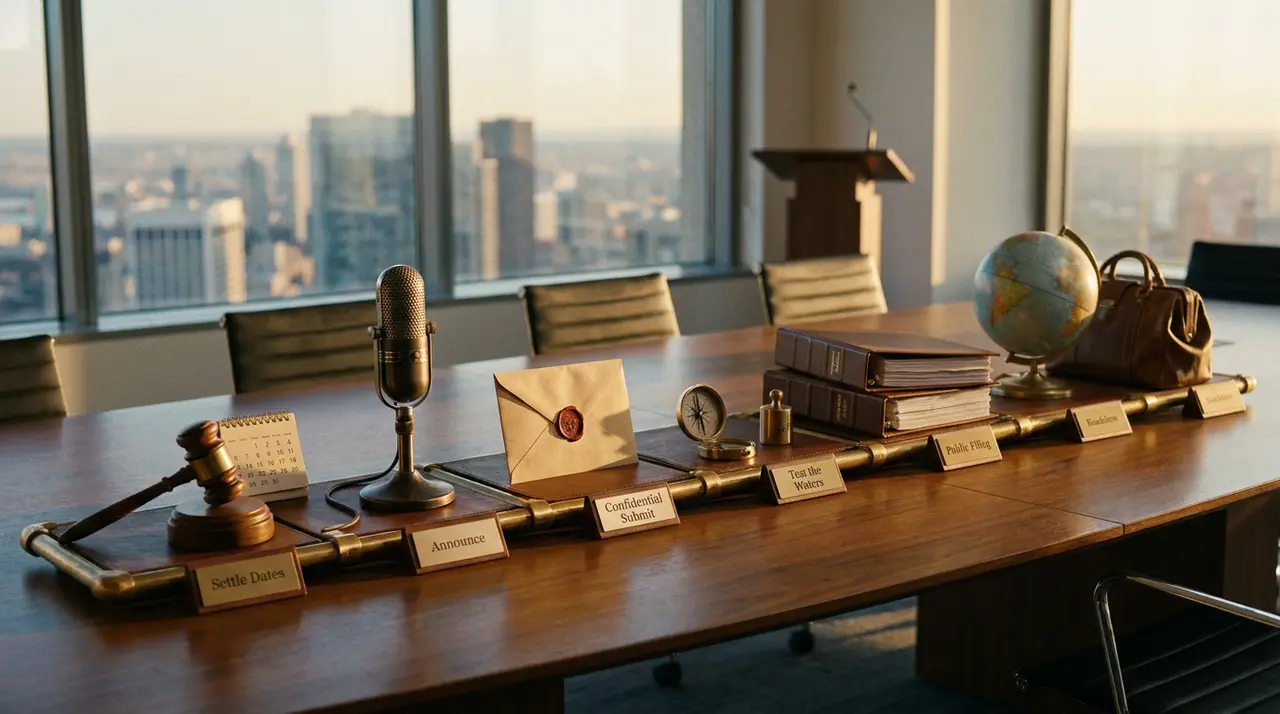
A step-by-step pre-IPO communications timeline for PR and IR teams: settle dates with counsel, announce before the 30-day window, submit confidentially, test the waters, then run the public filing and roadshow.
A pre-IPO communications plan sequences a company's media and investor messages around the SEC's offering rules, so the company builds a public track record before filing and stays inside the limits once filing starts. The plan has five stages: set the rules with counsel, announce early, submit confidentially, test the waters with institutions, and run the public filing and roadshow.
Updated November 12, 2026. This guide is general information for communications teams, not legal advice. The company's securities counsel and underwriters set the dates and approve what is said.
Contents
What is a pre-IPO communications plan?
What does the timeline look like at a glance?
Stage 1: What should a company settle before any public messaging?
Stage 2: What can be announced before the 30-day window?
Stage 3: How does confidential submission change messaging?
Stage 4: Who can a company talk to while testing the waters?
Stage 5: What happens at the public filing and the roadshow?
What should the PR and IR teams own at each stage?
How should a spokesperson answer questions about the IPO?
What timing mistakes do communications teams make?
What is a pre-IPO communications plan?
A pre-IPO communications plan is a calendar of what the company says, to whom and when, built backward from the date it expects to file a registration statement publicly. It has two audiences. The press and the public hear the company's story through PR, and investors hear the financial case through investor relations. The securities rules decide which audience can hear what at each stage.
The rules behind the plan are covered in our guide to the IPO quiet period. This guide turns them into a sequence a communications team can follow.
What does the timeline look like at a glance?
The timeline has five stages, and each stage changes what the communications team can do. The table summarizes the stages using the rules described in the sections below. Counsel confirms every date.
Stage Rule or window What PR can do What to hold back
Before messaging is restricted Starts at IPO preparation, with dates set by counsel Build a regular cadence of factual business news A one-off burst of promotion with no history behind it
More than 30 days before the public filing Rule 163A Place major announcements that do not refer to the offering Interviews that will be published after the window opens
Confidential submission Nonpublic SEC review Keep ordinary business news moving Any statement about the offering
Testing the waters Section 5(d) and Rule 163B Meetings with certain institutional investors Meeting materials that have not been reviewed like offering documents
Public filing and roadshow Public filing at least 15 days before the roadshow on the confidential route Follow the underwriters' communications plan Written materials other than the prospectus
Stage 1: What should a company settle before any public messaging?
Before any public messaging, a company should settle the restriction dates with securities counsel and start a regular cadence of factual business news. Counsel usually sets the date of the quiet period at the organizational meeting that starts IPO preparation, according to one practitioner guide to IPO communications.
The cadence matters because of Rule 169. Law firm summaries say the rule protects regular factual business information only when the company has a track record of releasing that kind of information in the ordinary course, in the same timing, manner and form. A company that has never published product news has no pattern to continue once the restrictions begin.
Stage 2: What can be announced before the 30-day window?
Major announcements should go out before the 30-day window opens. Rule 163A covers communications made more than 30 days before the registration statement is publicly filed, as long as they do not refer to the offering and the company takes reasonable steps to stop further distribution during the 30 days before filing. According to one securities law guide, counsel often tells management to get any big announcements out before that window closes.
For the communications team, this stage is the last open window for funding news, executive hires, customer wins and research releases. Interviews need the most care, because an interview given outside the window but published inside it can become a prohibited communication.
Stage 3: How does confidential submission change messaging?
A confidential draft submission means the company can start the SEC review without making its registration statement public, and the communications team says nothing about the offering. The JOBS Act allowed emerging growth companies to submit draft registration statements confidentially, and the SEC extended nonpublic review to other issuers in July 2017, according to law firm alerts from Haynes Boone and O'Melveny.
The practical benefit is that a company can begin review without disclosing sensitive financial, strategic and compensation information to competitors, and it can withdraw a draft without the public stigma of a failed offering. The communications team treats the submission as confidential and keeps the Rule 169 cadence going without mentioning it.
Stage 4: Who can a company talk to while testing the waters?
While testing the waters, a company can talk to certain institutional investors to learn whether they would be interested in an offering. Emerging growth companies have been able to do this since the JOBS Act added Section 5(d), covering qualified institutional buyers and institutions that are accredited investors. The SEC added Rule 163B in September 2019, effective December 3, 2019, which gives all companies a second way to test the waters with institutional investors, according to the Canadian law firm Osler.
Osler also notes that information shared in testing-the-waters meetings may carry liability for any material misstatement or omission. For communications teams, that means the meeting materials need the same review as any offering document.
Stage 5: What happens at the public filing and the roadshow?
At the public filing, the registration statement becomes visible and the roadshow can begin after a waiting period. A company that used the confidential route must publicly file its registration statement at least 15 days before the roadshow starts, according to the Haynes Boone alert and O'Melveny's summary of the SEC process.
After the registration statement takes effect, the post-effective period runs 25 days for companies listing on a national exchange, according to Fenwick's gun-jumping guide. Once the company is public, it moves into the routine of Regulation FD and earnings reporting. Our plain guide to Regulation FD and the guide to earnings release 8-K items cover that stage, and the smaller reporting company investor relations guide covers companies that list with scaled disclosure.
What should the PR and IR teams own at each stage?
The PR team owns the public story and the IR team owns the investor case, and counsel clears both. This checklist covers the common ownership split.
Before messaging begins, PR builds the news cadence and IR builds the fact base investors will ask about.
Before the 30-day window, PR places the major announcements and IR confirms that numbers in them match the draft registration statement.
During confidential review, both teams hold the line on the offering and keep ordinary business news moving.
During testing the waters, IR prepares the institutional meeting materials and counsel reviews them.
At the public filing and roadshow, PR and IR follow the underwriters' communications plan.
After listing, IR builds the earnings and analyst routine, and PR keeps the company story consistent with what is filed.
Companies still deciding whether to list should settle that question with securities counsel and underwriters before any public messaging starts. Virgo PR's investor relations services and financial public relations pages describe the communications work involved, and the review of small-cap investor relations programs shows what companies do after they list.
How should a spokesperson answer questions about the IPO?
Every spokesperson should have one approved sentence for questions about a possible offering, and counsel should write it. The goal is a consistent, calm answer that neither confirms nor invents anything, so a reporter's question on a podcast or at a conference does not become a prohibited statement.
Agree the line in advance. Counsel approves one short response, and every executive uses the same words.
Redirect to the business. After the approved line, move to a fact the company already releases in the ordinary course.
Log every question. Record who asked, when, and what was said, so counsel can review patterns.
Brief the wider team. Sales, product and recruiting staff talk to outsiders too, and they need the same line.
Check scheduled content. Review podcasts, conference slots and bylines already on the calendar against the restriction dates.
What timing mistakes do communications teams make?
Communications teams most often make timing mistakes, not wording mistakes, because the rules turn on when something is published and who sees it. Five patterns recur in the sources summarized above and in our IPO quiet period guide.
Letting an interview recorded before the 30-day window run inside it, which can turn a permitted conversation into a prohibited communication.
Starting a news cadence only after the restrictions begin, which leaves Rule 169 with no past pattern to protect.
Counting the 30 days from a confidential submission, when Rule 163A measures from the public filing.
Treating testing-the-waters materials as marketing copy, when the sources describe possible liability for misstatements in those meetings.
Letting executives post about growth or valuation on social media, which securities law summaries list as a common source of gun-jumping problems.
The fix in each case is the same: put every date on one shared calendar, and have counsel review anything that will be published or said near a restriction date.
Frequently asked questions
How early should a company start communications planning before an IPO?
A company should start before any public messaging is restricted, so it can build a regular news cadence and settle the restriction dates with counsel. The exact timing is a decision for counsel and the underwriters.
Can a company publicly discuss its IPO plans while in confidential review?
The sources describe the confidential route as a way to keep the draft registration statement out of public view during review. Whether and how any statement about the offering can be made is a question for securities counsel before anyone speaks.
What is testing the waters?
Testing the waters is a set of communications with certain institutional investors to find out whether they are interested in a contemplated offering. Emerging growth companies use Section 5(d) of the Securities Act, and all companies can use Rule 163B.
How long before the roadshow must a company file publicly?
A company that submitted a draft registration statement confidentially must file it publicly at least 15 days before the roadshow begins.
What does Rule 163A cover in a pre-IPO plan?
Rule 163A covers communications made more than 30 days before the registration statement is publicly filed, as long as they do not refer to the offering and the company takes reasonable steps to stop further distribution during the 30 days before filing.
Why does a company need a news cadence before the IPO?
Rule 169 protects regular factual business information only when the company has a track record of releasing that kind of information in the same timing, manner and form. A company with no history of releases has no pattern to continue.
Who approves what a company says before an IPO?
The company's securities counsel and its underwriters set the dates and approve what is said. The PR team owns the public story, the investor relations team owns the investor case, and counsel clears both.
What should an executive say when asked about an IPO?
Use the single line that counsel has approved, then return to a business fact the company already shares in the ordinary course. Do not confirm, deny or add detail beyond that line.
Should podcasts and conference talks be rescheduled before an IPO?
Counsel should review them against the restriction dates. A recording made earlier can still be a problem if it is published inside a restricted period, so check publication dates as well as recording dates.
Follow us
LinkedIn