Expertise · October 28, 2026
Proxy Fight Communications: How Disney Defeated Trian
By Kyle Porter, Executive Vice President & Managing Director.
Updated October 30, 2026
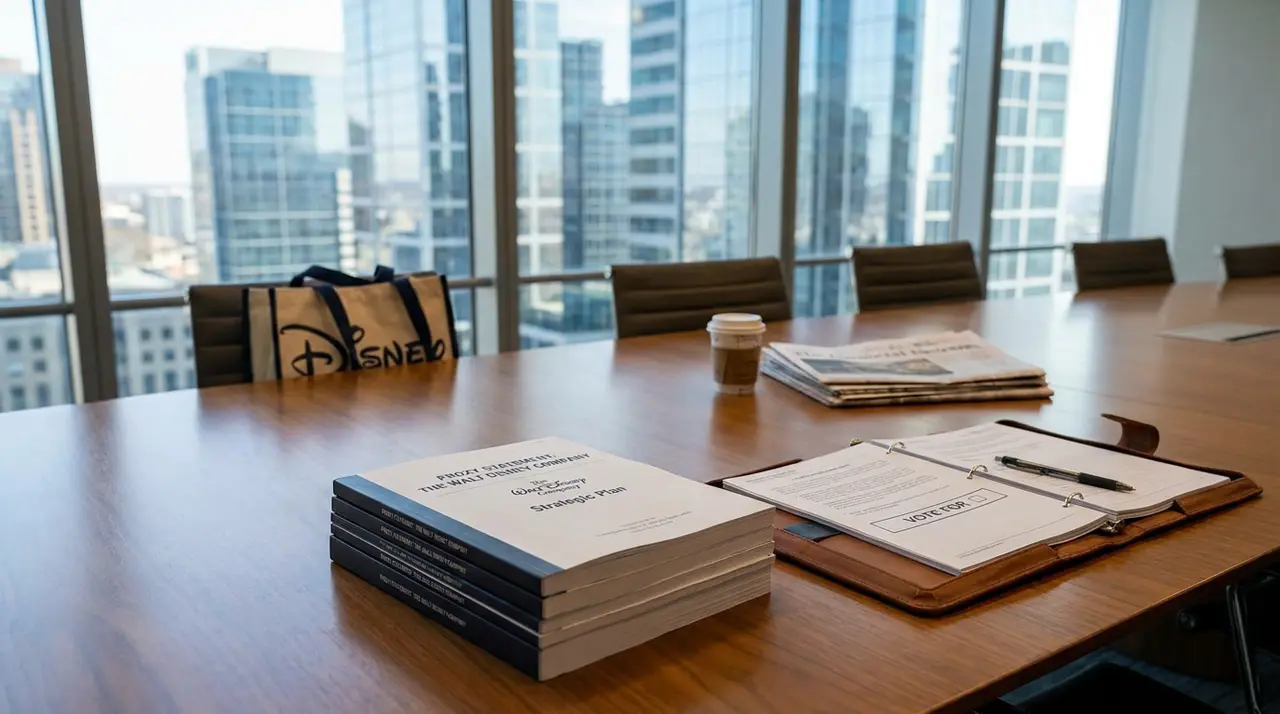
Proxy fight communications is the work of persuading shareholders to vote for a company's board nominees while an activist investor argues for its own. In Disney's 2024 contest with Nelson Peltz's Trian Partners, the company won by pairing a public turnaround case with outreach to retail holders, high-profile supporters and, in the final days, backing from Vanguard and BlackRock. Disney said its full slate was elected by a substantial margin.
What is proxy fight communications?
Proxy fight communications is the set of messages a public company and an activist investor use to win shareholder votes at an annual meeting. The activist nominates its own directors, the company defends its slate, and shareholders vote by proxy before the meeting, so most persuasion happens weeks ahead of the vote.
The audience is narrower than in a standard public relations campaign. The decisive audiences are institutional investors, proxy advisory firms, and individual holders who cast ballots.
A company with many individual investors faces a different task from one held almost entirely by institutions. Disney represents a distinct case because it has more retail shareholders than most public companies, as The Hollywood Reporter reported.
How did the Disney and Trian proxy fight unfold?
Trian Partners launched its 2024 campaign in January by nominating Nelson Peltz and former Disney chief financial officer Jay Rasulo for board seats. The campaign sought to unseat directors Maria Elena Lagomasino and Michael Froman at Disney's annual meeting on April 3, 2024.
The 2024 contest was Trian's second attempt. According to The Hollywood Reporter, Trian ran a proxy fight against Disney in 2023 and dropped it in February 2023 after Chief Executive Bob Iger announced a wholesale company restructuring.
A second activist, Blackwells Capital, also put forward nominees in 2024 and also lost, as CNBC reported.
Trian's criticism centered on two points, according to Fortune reporting. The activist argued that Disney's board had botched succession planning for Iger, and that the company had failed to build a profitable streaming strategy.
How did Disney make its case to shareholders?
Disney made its case to shareholders by presenting an operational turnaround already under way and expanding outreach beyond institutional funds. The response built on the 2023 restructuring plan that had already prompted Trian to end its initial campaign.
Disney also mobilized prominent third-party endorsements. CNBC reported that Disney drew support from founding family members, Star Wars creator George Lucas, JPMorgan Chase chief executive Jamie Dimon, and Laurene Powell Jobs.
The company released a video styled like a political advertisement that framed Trian as a disruption to Disney's turnaround plan, The Hollywood Reporter reported.
Campaign spending was substantial. CNBC estimated that Disney spent approximately $40 million on the contest, while Trian spent an estimated $25 million.
At the annual meeting, shareholders viewed a pre-recorded video of Iger presenting company priorities, while Peltz received three minutes to address the webcast.
Which investors decided the outcome?
Vanguard and BlackRock decided the outcome by backing Disney management in the final days before the vote, according to CNBC. Variety, citing Bloomberg, reported that Vanguard owned 7.8% of Disney's shares and planned to vote for Disney's candidates.
Trian gained backing from proxy advisors and smaller institutional investors for Peltz's candidacy, CNBC noted. Jay Rasulo's candidacy drew less enthusiasm from those groups.
The Disney contest shows that the largest index funds can settle an election even when advisory firms and smaller institutions support an activist. Companies risk defeat if they wait until the final week of voting to engage index fund managers.
What did the 2024 vote show?
The 2024 vote showed a decisive victory for Disney's incumbent board nominees. Disney announced that shareholders elected its full slate by a substantial margin.
CNBC reported, citing a person familiar with the tally, that Maria Elena Lagomasino defeated Peltz by roughly two to one, while Iger received 94% of votes cast. The Hollywood Reporter cited a source stating that Michael Froman defeated Rasulo by about five to one, and that retail investors supported Disney's candidates by roughly 75% to 25%.
Shareholder turnout reached the mid-60s in percentage terms, up from roughly 63% in 2023, CNBC reported. Disney shares rose nearly 50% between the start of Trian's campaign and the shareholder meeting.
Iger stated in a company release that Disney could focus on growth and value creation following the contest. Peltz told meeting attendees that Trian would continue monitoring Disney's performance.
Trian released a statement, reported by Fortune from The Wall Street Journal, expressing pride in refocusing Disney on governance and value creation. Activists that lose a proxy vote can still claim credit for strategic shifts, and CNBC noted that Trian and investor Isaac Perlmutter achieved paper gains from the share price rise despite the voting loss.
What can a public company copy from the Disney contest?
A public company can copy Disney's campaign sequence rather than the scale of its spending. Contested votes require early structural preparation across every category of shareholder.
-
Address the activist investor's central criticism with an operating plan before the vote takes place.
-
Map the shareholder register early to measure the ratio between individual investors and large index funds.
-
Line up independent third parties who can publicly validate management's operational record.
-
Engage the largest institutional holders and proxy advisory firms weeks before the final voting window.
-
Set clear boundaries on tone, avoiding personal attacks that consume resources without shifting votes.
Corporate legal counsel must review every public solicitation because selective disclosure rules apply throughout a contested vote. The Regulation FD guide for investor relations details these statutory requirements, and the guide to Regulation FD and social media reviews the rules governing unapproved digital communications.
These practices apply directly to smaller firms facing an activist stake. When an activist fund acquires a 5% position and requests board representation, the company must identify top holders, calculate retail ownership, schedule briefings with lead institutions, and release a clear operating plan addressing the activist's critique.
Small-cap corporate teams can manage this response within modest budgets. The analysis of small-cap investor relations programs outlines methods for maintaining direct shareholder contact before an activist surfaces.
Frequently asked questions
What is a proxy fight?
A proxy fight is a contested corporate election where an activist shareholder nominates rival board candidates and solicits votes against management's slate. Shareholders cast their votes by proxy in advance of the annual meeting.
Who won the Disney proxy fight with Nelson Peltz?
Disney won the 2024 proxy contest against Nelson Peltz and Trian Partners. The company announced on April 3, 2024 that shareholders elected Disney's full board slate, denying board seats to Peltz and Jay Rasulo.
How much did Disney spend fighting Trian?
Disney spent approximately $40 million defending its board seats against Trian Partners, according to reporting by CNBC. Trian spent an estimated $25 million running its dissident campaign.
Did any other activist run against Disney in 2024?
Blackwells Capital also nominated alternative directors at Disney's 2024 shareholder meeting and failed to win board seats, CNBC reported. Disney ran simultaneous campaigns to defeat both dissident slates during the same proxy season.
Why did Vanguard and BlackRock matter?
Vanguard and BlackRock determined the outcome because they represented Disney's two largest shareholding institutions, according to CNBC. Their late-stage votes for management secured the board's margin of victory. The investor relations services overview outlines how corporate issuers organize communication strategies for major institutional holders.
Follow us