
Quantum Computing PR Strategy: A Guide for Startups
By Kyle Porter, Executive Vice President & Managing Director.
Updated November 14, 2026
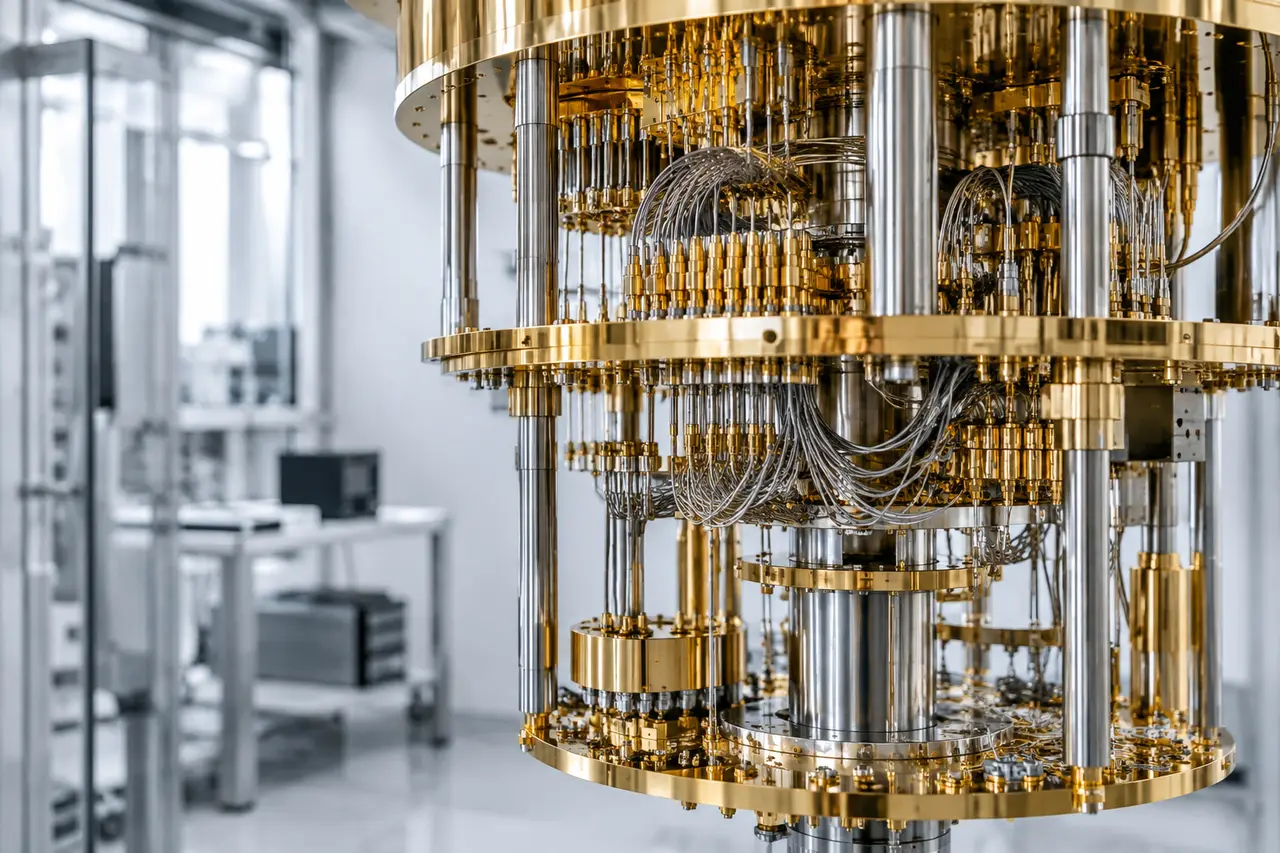
A quantum computing PR strategy has four parts: a technical narrative, checkable proof, an announcement calendar and a media plan. Practical guide for startups.
A quantum computing PR strategy has four parts: a technical narrative that states the use, proof that outside parties can check, a calendar of announcements spread across months, and a media plan that starts with trade press and builds toward business outlets. It serves five audiences: investors, enterprise buyers, governments, scientists and recruits.
Last updated: November 14, 2026. Virgo PR publishes this guide and ran the Quantum Art campaign cited below, so those figures are Virgo's own and were not independently confirmed. This guide is part of Virgo PR's quantum computing PR section.
On this page: audiences, core narrative, proof points, press sequencing, announcement calendar, funding rounds, choosing an agency, measurement, risks, a 90-day plan, the Virgo quantum guide library and FAQs.
Who are the audiences for quantum PR?
Quantum PR serves five audiences, and each needs a different proof point from the same story. A strategy that names its audiences first can match each outlet and message to one of them.
AudienceWhat it needs to seeWhere it is reached
InvestorsTechnical credibility, a roadmap and credible backersBusiness and financial press, such as the Financial Times, The Wall Street Journal and Forbes Enterprise buyersA specific use, tested results and customer namesTrade titles, case studies, podcasts Governments and fundersFit with national programs and sovereign capabilityNational press, program events and policy briefings Scientists and engineersPeer-reviewed results and open technical detailJournals, conferences and technical trade press RecruitsEvidence the company is credible and growingThe company website, interviews and podcasts
Appleby Communications, a UK quantum specialist, works with the UK national quantum program and says wider context, such as national strategy and sovereign capability, turns a single announcement into a story with several angles.
What should the core narrative say?
The core narrative should state what the technology is for in one sentence, back it with proof and give an honest timeline. Everything else in the strategy repeats and supports that sentence.
Virgo's Quantum Art case study describes building a messaging framework from the company's scientific papers, milestones and internal strategy, translating dense physics into an investor-grade story. Appleby adds a caution: the pressure to over-claim is highest when coverage slows, and companies that stay disciplined gain visibility over time.
What proof points do reporters and investors accept?
Reporters and investors accept proof that someone outside the company can check. Peer-reviewed results, named partners, benchmark data and integrations with recognized platforms all qualify.
The Quantum Art program drew trade coverage of its work with Nvidia's CUDA-Q software, in outlets such as Engineering.com and GamesBeat, alongside peer-reviewed research coverage in Quantum Zeitgeist. Keep a proof file with every verifiable result, who can confirm it and what may be disclosed.
How do you sequence trade press and business press?
Start with trade press, then build toward business press as the proof accumulates. HKA Marketing Communications, a quantum PR agency in California, describes the path as early trade coverage, then a quote in a major technical trade, then enough accumulated coverage that top-tier outlets begin to pay attention.
Virgo's Quantum Art campaign mixed outlet types from the start, with introductions to Forbes, The Wall Street Journal, Business Insider and SiliconAngle alongside quantum trade press and podcasts. See Virgo's guide to media coverage for a quantum computing startup for the pitching steps, and the piece on why deep-tech startups struggle to get mainstream coverage for the obstacles.
What belongs in a quantum announcement calendar?
A quantum announcement calendar combines fixed industry moments with the company's own milestones, spaced so there is news every few weeks instead of once a year. Virgo's case study describes an 18-month calendar covering architecture reveals, roadmap milestones, peer-reviewed research and commercial partnerships, each building on the last.
TypeExamplesSource
Fixed industry momentsAPS March Meeting; World Quantum Day on April 14; Economist Impact's Commercialising Quantum Global; the International Year of Quantum in 2025; IEEE Quantum Week, held in Toronto in September 2026TFD, Tyto and Quandela materials Company milestonesArchitecture reveal, roadmap update, peer-reviewed result, named partnership, integration, funding roundVirgo's Quantum Art case study
Check the dates of recurring events each year, since organizers set them.
How does a funding round fit the strategy?
A funding round is the most visible milestone in the calendar, and the strategy should make it feel like the next step in a known story. Quantum Art's Series A closed at $100 million, extended to more than $140 million, after months of coverage, and Virgo reports about $164 million in lifetime funding secured during the engagement.
The announcement itself needs its own plan for the exclusive, embargo, investor quotes and press materials. The embargo timing guide explains when to brief reporters ahead of the lift time. For market context, see Virgo's quantum computing funding report.
How do you choose an agency and set a budget?
Choose an agency that names quantum clients, and budget against published ranges while treating any quantum premium as an estimate. Virgo's list of quantum computing PR agencies compares ten agencies and discloses that Virgo publishes it, and the guide to choosing an agency for an emerging technology company gives a scorecard.
Published tech PR retainers run about $5,000 to $22,000 per month and projects about $10,000 to $40,000, and no quantum agency other than Virgo publishes prices. Virgo's retainers start at about $10,000 per month with a three month minimum, and its guide to quantum computing PR costs separates published figures from estimates.
How do you measure quantum PR?
Measure quantum PR by what the coverage did, not by how much of it there was. Useful measures include placements in outlets your audiences read, executive quotes in stories, investor and partner inquiries after coverage, and speaking invitations.
Appleby reports two examples. A Financial Times feature on a University of Nottingham discovery brought international funding enquiries, and ITV News coverage of Cerca Magnetics' quantum brain scanner preceded a multi-million pound UK government project. Both are the agency's own reports of single cases. Virgo reports 100+ placements for Quantum Art and says it was named to Globes' Most Promising Startups of 2026.
What risks should a quantum PR strategy avoid?
Four risks recur: hype, timelines the engineers cannot support, jargon that excludes general readers, and stale analogies. Each damages trust with the reporters a company needs again.
-
Hype. Claims beyond the evidence cost credibility, and Appleby warns against over-claiming.
-
Unsupported timelines. A date that the engineering team cannot meet becomes the story when it slips.
-
Jargon. Reporters and investors need the use before the physics.
-
Stale analogies. Tyto argued in 2022 that the Schrödinger's cat analogy explains little to newcomers.
What does a 90-day starter plan look like?
A 90-day starter plan has three stages, and this is an editorial suggestion, not a reported result.
-
Days 1 to 30: write the core narrative, assemble the proof file and train the executives who will speak to reporters.
-
Days 31 to 60: introduce the company to trade and specialist reporters, with one announcement that has verifiable proof.
-
Days 61 to 90: pitch business press with an angle tied to use and investment, apply to a conference, and draft the 12-month calendar.
Virgo's technology PR agency practice builds this kind of plan for emerging-technology companies. To discuss a quantum program, contact Virgo PR.
Where can you find all of Virgo's quantum computing PR guides?
Virgo's quantum computing PR hub is the home of the quantum library, and each guide below covers one part of the program in depth.
-
10 Best Quantum Computing PR Agencies in 2027: a ranked comparison of ten agencies.
-
How Much Does Quantum Computing PR Cost in 2027?: published price ranges and estimates.
-
How to Get Media Coverage for a Quantum Computing Startup: the pitching steps, trade first.
-
Quantum Computing Funding Report 2026: seven major financings and what they show.
-
Quantum Art PR Case Study: from stealth to a $140M Series A.
-
Why deep-tech startups struggle to get mainstream coverage: the obstacles and fixes.
-
How to Choose a PR Agency for an Emerging Technology Company: a five-part scorecard.
Frequently asked questions
What is a quantum computing PR strategy?
A quantum computing PR strategy is a plan for how a quantum company explains its technology to investors, buyers, governments, scientists and recruits through a core narrative, proof, a calendar and a media plan.
When should a quantum startup start PR?
Start before a funding round or launch. Quantum Art's program ran 18 months before its Series A closed.
How is quantum PR different from general tech PR?
Quantum PR needs technical review of every claim, a narrative that works without a shipping product and care with timelines. The audience also includes government funders and scientists.
Which outlets matter most for quantum companies?
It depends on the audience. Business press reaches investors, trade press reaches buyers and engineers, and national press helps with government programs.
How much should a quantum startup spend on PR?
Published tech PR guides put retainers at about $5,000 to $22,000 per month, with boutique agencies at $7,500 to $22,000 and freelance specialists at $3,000 to $8,000. No quantum-specific price list exists. Virgo PR retainers start at about $10,000 per month with a three month minimum. See the full breakdown in the guide to quantum computing PR costs.
Follow us
LinkedIn