Warehouse Robotics After the Pilot: 6 Programs Reviewed
By Kyle Porter, Executive Vice President & Managing Director.
Updated November 15, 2026
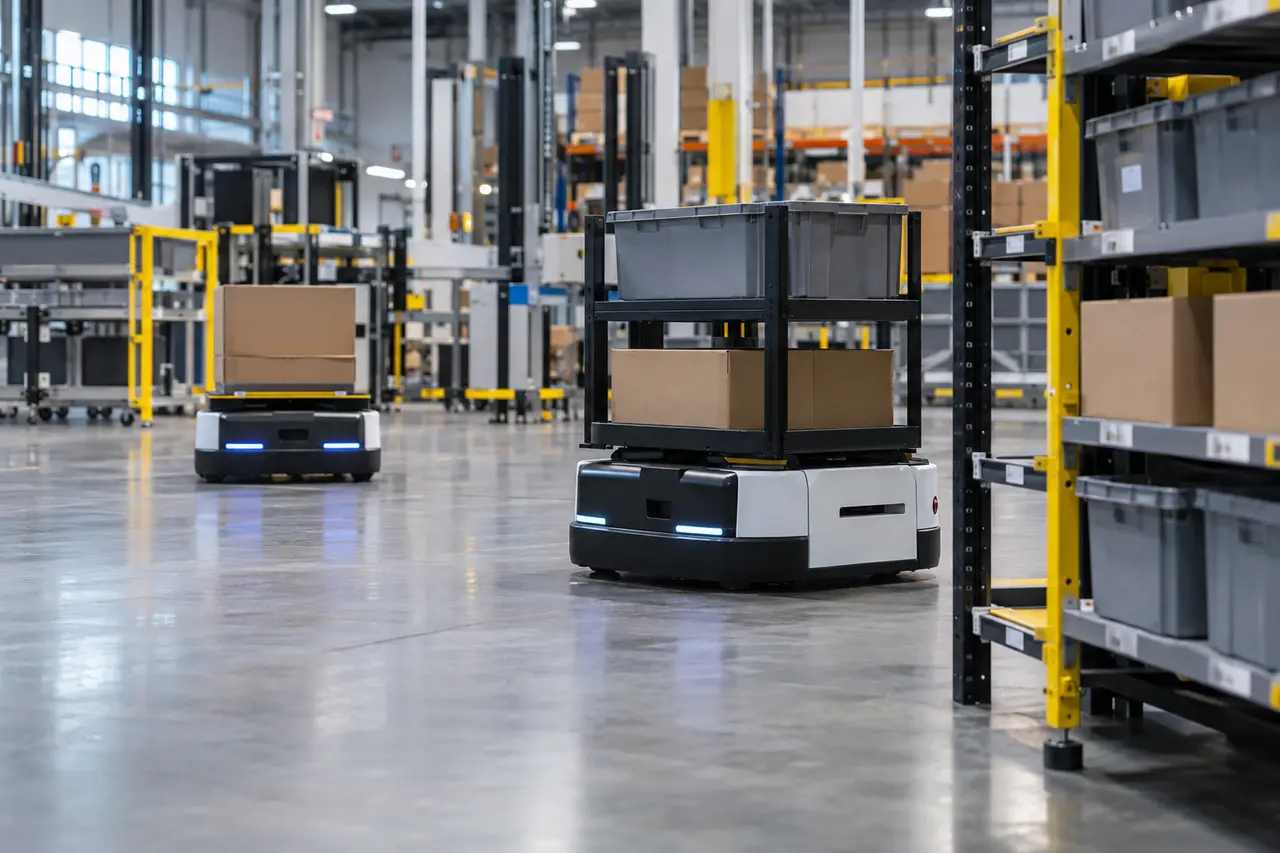
GXO documented Digit doing commercial work 204 days after its pilot announcement. Virgo PR compares six warehouse robotics programs and what each proves.
GXO documented Agility Robotics' Digit doing commercial warehouse work 204 days after publicly announcing its pilot. Its November 2026 Apptronik update reported a completed Apollo trial and plans for further testing. One program has an operating site and a task count; the other has a pilot result and a conditional rollout plan.
Last updated: November 15, 2026
How do GXO's Digit and Apollo programs compare?
GXO's Digit program has a named operating site and a cumulative task count, while its Apollo program has a completed pilot and a letter of intent. GXO announced the two humanoid robotics expansions less than three weeks apart in late 2026. The October 26 Agility release named two new sites for Digit, which GXO said had already moved more than 100,000 totes at a Georgia fulfillment center. The November 12 Apptronik release reported a completed U.S. picking pilot for Apollo and a letter of intent for further trials.
Evidence typeAgility Robotics DigitApptronik Apollo
Public startPilot disclosed December 6, 2023 at the SPANX facility in Flowery Branch, Georgia.Proof-of-concept program announced June 20, 2024. Commercial stepMulti-year Robots-as-a-Service agreement announced June 27, 2024, 204 days after the pilot disclosure.Letter of intent announced November 12, 2026. Operating evidenceMore than 100,000 totes moved at Flowery Branch, reported October 26, 2026.A completed U.S. pilot for picking small consumer goods earlier in 2026. GXO reported no cumulative workload from a live site. Announced next stepDeployments at Statesville, North Carolina, and Lebanon, Tennessee, expected to begin in early 2027.Joint trials beginning in 2027 and a conditional rollout of up to 1,000 robots over four years, with initial North American deployment in late 2027.
GXO and Agility also appear in Virgo PR's review of warehouse automation PR cases.
How did Digit move from pilot to expansion?
Digit moved from a public pilot disclosure to a documented commercial site, and then to two named expansion sites. GXO publicly disclosed the pilot in its December 6, 2023 pilot release, which placed the tests at SPANX's facility in Flowery Branch, Georgia. In its June 27, 2024 agreement release, GXO announced a multi-year service agreement and described Digit taking totes from collaborative robots and placing them on conveyors at the same facility.
The 204 days measure the interval between those two public disclosures. In October 2026, GXO reported more than 100,000 totes handled at Flowery Branch and named Statesville, North Carolina, and Lebanon, Tennessee, as the next sites.
What does Apollo's path from proof of concept show?
Apollo's path shows a completed pilot followed by a conditional plan, not an operating site with a workload figure. GXO announced the proof of concept in its June 20, 2024 Apptronik release. In the November 2026 release, GXO said Apollo had wrapped a pilot earlier that year focused on autonomous picking of small consumer goods.
The same release said GXO and Apptronik had run live autonomous evaluations on more than 50 logistics tasks at Apptronik's Robot Park training facility, which is a training site rather than a customer warehouse. The trials beginning in 2027 cover picking, packing, sortation and moving cases or totes. The target of up to 1,000 robots depends on the programs meeting agreed performance, safety and operating criteria.
What kinds of milestones appear in the public record?
The public record on warehouse robotics contains four kinds of milestones, and each proves something different. A completed trial shows that a system has been tested on a defined task. A named operating site shows where the system is doing routine work.
A cumulative task count shows work performed over time, but it does not show current use. Current routine use needs a dated confirmation from the operator that the system is running. A contract, letter of intent or memorandum of understanding describes a commitment or plan whose rollout can take years. Virgo PR's warehouse automation PR agency guide covers what trade press wants from each kind of announcement.
What does the public record show for six programs?
Six programs from GXO, DHL Supply Chain, Walmart and Ingka Group document different amounts of operating evidence, and each pairs it with a different announced next step. The table separates what each operator has reported as running from what it has said comes next.
Operator and systemOperating evidenceAnnounced next step or scope
GXO / Agility Robotics DigitGXO documented commercial tote transfers at the SPANX fulfillment facility in Flowery Branch, Georgia, 204 days after the public pilot announcement.GXO expected deployment at two additional sites to begin in early 2027. GXO / Apptronik ApolloGXO disclosed a completed U.S. pilot for picking small consumer goods in 2026.Further trials starting in 2027 under a letter of intent, with a conditional global rollout of up to 1,000 robots. DHL Supply Chain / Boston Dynamics StretchDHL introduced Stretch commercially for container unloading in North America in 2023 and subsequently reported deployments in the UK and continental Europe.A 2025 memorandum of understanding outlined more than 1,000 additional units. DHL Supply Chain / Locus RoboticsDHL reported 500 million robot-assisted picks in 2024. Locus reported the billionth pick and daily operations at more than 40 DHL-managed sites worldwide in February 2026.No new fleet target in the milestone announcements reviewed. Walmart / SymboticWalmart described Symbotic equipment running at multiple buildings in 2025, including two modules in New Braunfels, Texas.An October 2026 agreement covered additional automation capabilities at 25 U.S. regional distribution centers. Ingka Group / VerityIngka reported more than 250 inventory drones operating across 73 locations in nine countries in August 2024. The release did not split those locations between distribution centers and stores.Ingka announced plans for further deployment after testing at a Belgian distribution center.
How is a fleet plan different from completed work at DHL?
DHL's two programs show the difference between a fleet plan and completed work. The May 13, 2025 Stretch memorandum release described container unloading already under way in multiple markets and set out a plan for more than 1,000 additional units. The Locus program reported an operating milestone instead: the 500 millionth robot-assisted pick took place at its Toledo, Spain, facility in May 2024, according to DHL's 500 million picks release.
In February 2026, Locus reported the billionth pick and said its robots supported daily fulfillment at more than 40 DHL-managed sites worldwide. The additional Stretch units describe intended fleet growth. The Locus milestones show cumulative work performed with robot assistance, and the 40-site figure is the operating evidence for current use.
Virgo PR's warehouse robotics PR analysis covers how announcements from DHL and Symbotic earned trade press.
Why can one Walmart agreement contain several scale measures?
One Walmart agreement can contain several measures of scale because site counts, module counts and spending describe different things. Walmart's 2022 announcement put all 42 of its regional distribution centers in scope for Symbotic automation, and Symbotic's January 2025 release restated that scope. At its April 9, 2025 investor meeting, Walmart described two modules running at its New Braunfels facility and a third on the way.
In Symbotic and Walmart's October 2026 release, the companies announced a further agreement covering additional capabilities at 25 U.S. regional distribution centers, with approximately $6 billion in initial spending commitments over several years. The two site counts describe the scope of different agreements. The New Braunfels figures describe modules operating at one facility.
Why does site type matter in Ingka's drone counts?
Site type matters because Ingka Group has not split its drone count between distribution centers and stores. In its March 2023 release, Ingka described 100 Verity inventory drones flying in IKEA stores across 16 locations in seven countries. In its August 2024 release, it reported more than 250 drones across 73 locations in nine countries and said the upgraded system would be integrated into fulfilment units, including distribution centers.
The August 2024 release also reported a year of testing at the Winterslag distribution center in Belgium and named the Perryville, U.S., distribution center as the next site. A reader tracking warehouse adoption cannot treat 73 locations as 73 warehouses.
What should the next robotics announcement include?
A deployment claim can be checked when the release identifies the operator, the facility, the routine workflow and the date the operator confirmed it was running. To substantiate scale, the release should add a second site or a defined volume of work. A count becomes more useful when it specifies the period, the sites included and whether the work was autonomous or robot-assisted.
Logistics brands planning a launch can compare these disclosure elements with the trade press expectations in Virgo PR's logistics PR agency guide.
For robotics companies announcing a deployment, the follow-up worth publishing is what happened at the original site. Name the task the system now handles and report the work it performed over a defined period. If there is a second site, give its status and launch date separately. Buyers can then tell which part of the program they can evaluate today and which part still depends on future trials, installation or sign-off.
Which other Virgo PR studies use the same evidence method?
Two other Virgo PR studies published in November 2026 apply the same discipline of separating what was announced from what was measured. The Quantum Computing Media Visibility Index 2026 screened 4,058 archive posts and kept 761 quantum computing articles from five outlets. The emerging industries casebook compares milestones with the evidence for real-world use across 77 dated records in 15 industries.
How was this review conducted?
Virgo PR reviewed public operator disclosures, joint announcements and investor materials for six illustrative programs through November 15, 2026. The cases cover humanoid material handling, unloading, order picking, distribution center automation and inventory scanning.
The examples illustrate how companies disclose operating milestones. They do not establish how often pilots convert into production across the industry. Operating figures are company-reported. Independent estimates of uptime, safety outcomes, labor savings and return on investment fall outside the scope of this review.
Frequently asked questions
Does a cumulative task count show a robot is in use today?
No, a cumulative task count shows work performed over time, not current use. Current routine use needs a dated confirmation from the operator that the system is running. The Locus billionth pick is a cumulative count, while the report of daily operations at more than 40 DHL-managed sites in February 2026 is the evidence of current use.
Does a completed pilot mean a robot is in routine use?
No, a completed pilot shows only that a system was tested on a defined task. Routine use is shown by a named operating site and the date the operator confirmed the system was running. GXO's Apollo pilot is a completed trial, while Digit at Flowery Branch, Georgia, is a documented commercial site.
What did GXO report about Digit in October 2026?
GXO reported that Agility Robotics' Digit had moved more than 100,000 totes at its Flowery Branch, Georgia, facility. GXO also named Statesville, North Carolina, and Lebanon, Tennessee, as the next two sites, with deployments expected to begin in early 2027.
How does a fleet plan differ from a cumulative task count?
A fleet plan describes units a company intends to add, while a cumulative task count describes work already performed. DHL's memorandum for more than 1,000 additional Stretch units is a plan. The Locus billionth pick is a count of completed robot-assisted work.
Are the reported figures independently verified?
No, the operating figures in this review are company-reported. The review does not include independent estimates of uptime, safety outcomes, labor savings or return on investment, and it does not measure how often pilots convert into production across the industry.
Follow us
LinkedIn