PR Tips · November 3, 2026
Industrial Robotics PR: Why Impressive Demos Are Not Enough
By Kyle Porter, Executive Vice President & Managing Director.
Updated November 3, 2026
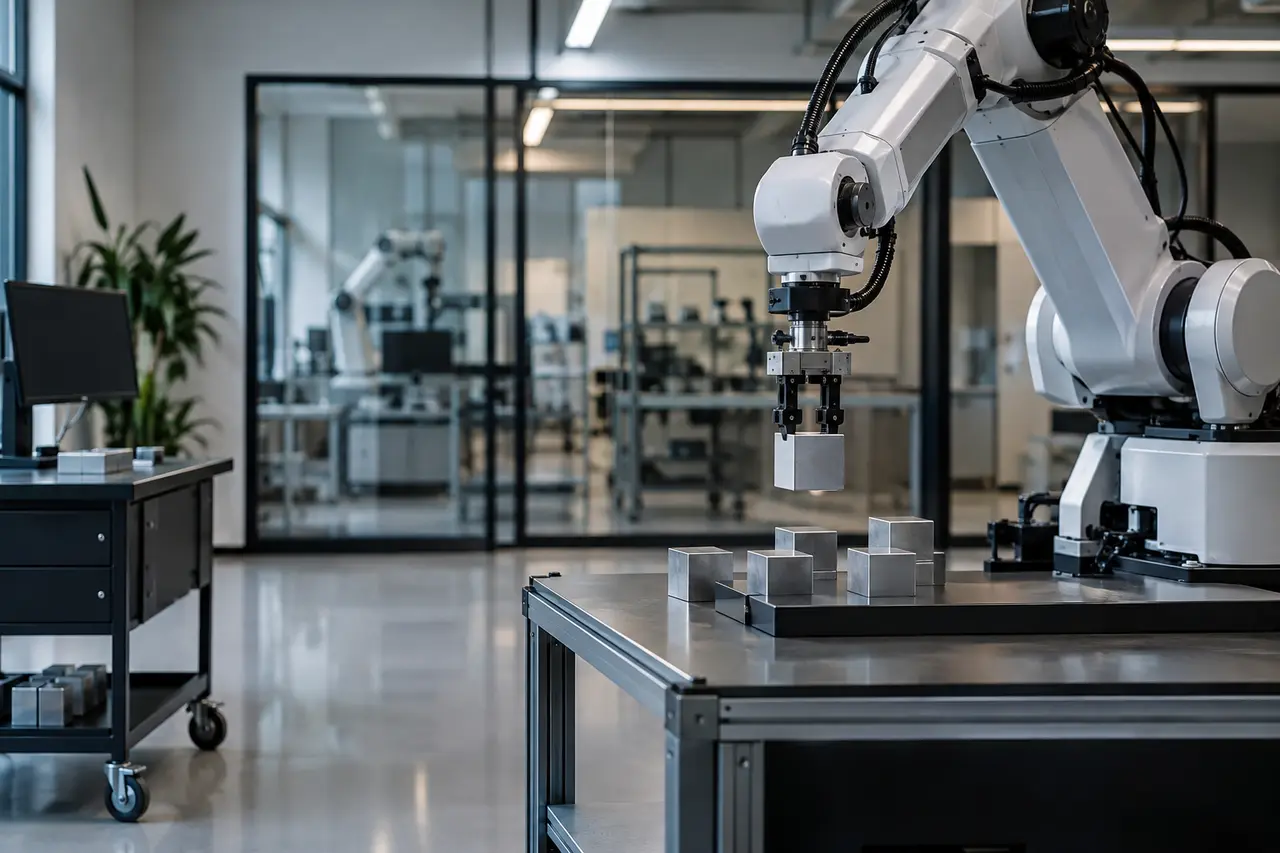
Industrial robotics companies have a natural advantage when it comes to attracting attention. Their technologies are visual. A robotic arm assembling components, an autonomous mobile robot navigating a warehouse, or a robotic picking system handling complex objects can generate compelling demonstrations.
But a successful demonstration does not necessarily establish commercial value. As industrial automation expands worldwide, robotics companies face a growing communications challenge: explaining why their technologies matter beyond what audiences can see in a video. The strongest industrial robotics public relations strategies connect engineering achievements with measurable operational results.
Industrial Robotics Has Become a Global Growth Market
The International Federation of Robotics reported in its World Robotics 2025 study that approximately 4.66 million industrial robots were operating in factories worldwide in 2024. The organization also reported 542,000 new industrial robot installations during the year.
Those figures demonstrate the scale of industrial automation. Robotics is no longer a niche technology category. Manufacturers, logistics operators, and other industrial businesses are evaluating automation as part of broader efforts to improve productivity, address operational constraints, and modernize facilities.
For robotics companies, this expanding market creates commercial opportunities. It also makes differentiation more difficult. As more businesses introduce automation technologies, announcing another robot or demonstrating another automated task may no longer be enough to generate sustained media interest.
The Robotics Demonstration Problem
A robot performing a difficult task can be impressive. But journalists and potential customers need to understand what happens after the demonstration ends.
-
Can the system operate reliably over extended periods?
-
What happens when conditions change?
-
How does the technology integrate with existing equipment and software?
-
What maintenance does it require?
-
How does its performance compare with existing processes?
-
What are the costs associated with implementation?
These questions determine whether a robotics development represents a meaningful commercial advance. A demonstration may show that a technology is technically possible. A deployment can begin to show whether it is operationally practical. Effective robotics communications should distinguish between the two.
The Strongest Robotics Stories Begin With an Operational Problem
Industrial customers generally do not purchase robots simply because the technology is impressive. They invest in automation to address specific operational requirements. These may include increasing production capacity, improving consistency, reducing repetitive manual tasks, addressing difficult working conditions, or improving warehouse throughput.
Communications should begin with the problem. For example, a warehouse robotics company may develop technology that automates the movement of materials between storage locations and fulfillment areas. The strongest story is not simply that the company has developed an autonomous robot. It is how the system changes the warehouse workflow.
-
Does it reduce unnecessary movement?
-
Can it operate alongside existing equipment?
-
Does it improve throughput?
-
What implementation challenges must customers consider?
These questions make the technology relevant to business audiences.
How Should Robotics Companies Demonstrate ROI?
Return on investment is one of the most important subjects in industrial automation. But robotics companies should be cautious about broad financial claims.
The economic value of a deployment can depend on facility design, labor requirements, operating hours, integration costs, maintenance, and the characteristics of the tasks being automated. A system that produces strong results in one environment may perform differently in another. Companies should explain how performance was measured and under what conditions.
Useful metrics may include throughput, accuracy, uptime, operating costs, and implementation time. Where appropriate, customer case studies can compare performance before and after deployment. However, results from a pilot program should not be presented as guaranteed outcomes for every customer. Credible communications explain both the benefits and the limitations.
Why Do Real Deployments Beat Promotional Claims?
Industrial robotics companies can strengthen their media programs by documenting customer deployments. A useful deployment story identifies the operational challenge, technology implemented, integration requirements, and results achieved. It may also explain what the company learned during implementation. Virgo's guide to what a useful tech PR case study must include covers the four parts to document.
Those details are valuable because industrial automation rarely occurs in isolation. Robotics systems must often work with existing software, equipment, personnel, and operating procedures. The ability to explain these practical requirements can distinguish a company from competitors emphasizing only technical capabilities.
Customer-approved deployment stories also provide journalists with independent context. Where possible, the customer's perspective can help demonstrate why the technology was adopted and how it affected operations.
Warehouse Robotics Offers a Clear Example
Warehouse automation illustrates the difference between technical innovation and commercial relevance. Robotics companies are developing systems for material movement, picking, sorting, storage, and fulfillment. These technologies address operational challenges involving order volumes, facility efficiency, and the complexity of managing inventory.
But warehouse operators must evaluate more than whether a robot can perform a task. They need to understand how the technology interacts with warehouse management systems, existing infrastructure, and human workers. They must also consider reliability, safety, maintenance, and scalability.
A communications program that explains these issues provides more useful information than one focused entirely on product demonstrations. For examples of announcements that earned trade press, see warehouse robotics PR lessons from DHL, Amazon and Symbotic.
Why Do Industrial Robotics Companies Need Specialized Media Relations?
Robotics companies operate across multiple industries. A manufacturing automation company may need to reach factory executives, production engineers, and systems integrators. A warehouse robotics company may prioritize logistics operators, fulfillment executives, and supply chain technology buyers. An autonomous mobile robotics developer may have audiences across manufacturing, distribution, and industrial facilities.
These markets are covered by specialized publications. Depending on the technology, relevant outlets may include The Robot Report, Robotics 24/7, Modern Materials Handling, Automation World, and manufacturing industry publications.
The most effective media strategy identifies which journalists cover the company's particular application. A technical deployment story may be more valuable to a specialized industrial publication than to a general technology outlet.
How Should Robotics Companies Address Workforce Questions?
Automation frequently generates questions about employment. Journalists, customers, and policymakers may ask whether robotics technologies replace workers, change job requirements, or create new operational roles. Companies should address these questions directly.
The effects of automation depend on the technology, industry, and deployment environment. Some systems automate repetitive tasks. Others change how employees interact with equipment or manage operations. Communications should explain what the technology actually changes.
Companies should avoid unsupported claims that automation universally creates jobs or eliminates labor shortages. A credible explanation of workforce implications is more useful than an overly broad promise.
The Importance of Safety and Reliability
Industrial robotics companies operate in environments where safety and reliability can have significant consequences. Public statements should accurately describe the systems' operating requirements and limitations.
Claims involving autonomous operation, collision avoidance, human interaction, or safety performance should be supported by appropriate testing and evidence. Companies should also distinguish between controlled demonstrations and commercial deployments. A robot performing successfully in a laboratory environment does not automatically establish that it can operate under every industrial condition.
Clear communications about these distinctions help build trust with technical audiences.
Original Research Can Create Additional Media Opportunities
Robotics companies do not need to depend exclusively on product launches. They may be able to contribute useful research about automation adoption, implementation challenges, operational performance, or changing industrial requirements.
A company working with warehouse operators may identify recurring obstacles to automation. A manufacturing robotics developer may understand the technical challenges associated with integrating automation into existing production systems. These insights can support industry reports, executive commentary, contributed articles, and targeted media outreach.
Research should be based on credible evidence and clearly described methodology. The objective is to help audiences understand industrial automation rather than simply promote a particular product.
How Is AI Changing Robotics Communications?
Artificial intelligence has become an increasingly prominent subject in robotics. Companies may use machine learning, computer vision, or other AI techniques to support perception, planning, or decision-making.
But describing a robot as AI-powered does not explain its commercial significance. Communications should identify what the technology actually enables. Regulators have challenged unsupported AI claims, as covered in Virgo's look at AI washing cases.
-
Does it improve object recognition?
-
Does it allow the system to adapt to changing conditions?
-
Does it reduce the need for manual programming?
-
Has it improved performance in a measurable way?
These questions help distinguish meaningful technical advances from generic AI marketing. As AI becomes more common in industrial automation, evidence of practical results will become increasingly important.
How Should You Measure Industrial Robotics PR Success?
Robotics companies should evaluate communications based on audience relevance and business objectives. Coverage in a specialized industrial publication may reach the engineers, operations leaders, and executives responsible for evaluating automation investments.
Useful measurements include coverage in priority trade publications, technical message accuracy, executive interviews, relevant website traffic, and qualified commercial inquiries. Companies should also examine whether coverage communicates the operational value of their technologies. A story that accurately explains a deployment may be more useful than a broader article focused primarily on a visual demonstration.
The Future of Industrial Robotics Communications
Industrial automation will continue to evolve as companies develop new technologies and expand robotics into additional applications. But the communications environment is also becoming more demanding.
Customers and journalists increasingly need evidence that a technology can operate reliably outside controlled demonstrations. They want to understand implementation requirements, measurable performance, and commercial relevance. Robotics companies that provide this information can establish credibility beyond individual product launches. The strongest communications programs will combine technical expertise with real-world evidence.
The Bottom Line
Industrial robotics companies have no shortage of impressive technology. The challenge is demonstrating why that technology matters. A compelling demonstration can attract attention, but sustained industry authority requires evidence of operational value.
Companies that communicate verified deployment results, explain integration requirements, address workforce questions, and provide credible technical expertise can build stronger relationships with customers and journalists. As industrial robotics becomes increasingly widespread, the companies that explain real business outcomes will be better positioned to stand out.
Related reading: Warehouse Robotics PR: 3 Announcements That Won Press and the Greenbox Robotics technology PR case study.
Sources and Further Reading
-
International Federation of Robotics, World Robotics 2025.
-
International Federation of Robotics, annual industrial robot installation statistics.
-
The Robot Report, industrial robotics and automation coverage.
-
Association for Advancing Automation, industrial automation industry resources.
Follow us