Our News · August 9, 2026
Tech PR Case Study | Quantum Art
By Virgo PR Editorial
From Stealth to $140M+ Series A, How Virgo Built Credibility for a Quantum Computing Leader Before It Had a Product to Sell
The Problem
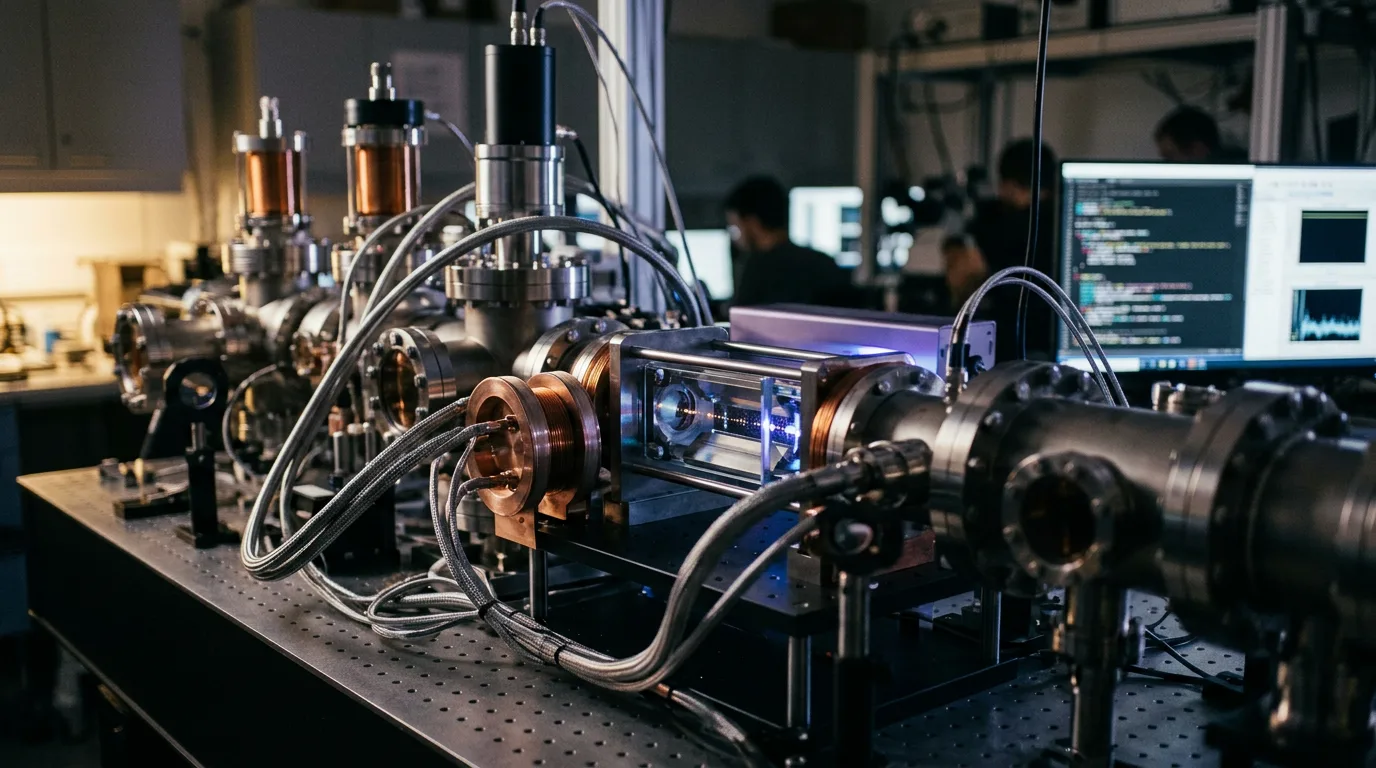
Quantum Art, an Israeli trapped-ion quantum computing company, came to Virgo with zero public presence. No website narrative. No media footprint. No executive visibility. The company was operating entirely in stealth.
The quantum computing sector was already loud. IBM, IonQ, Quantinuum, all well-funded, all well-known, all commanding the coverage and the investor conversations. Quantum Art needed to compete for capital against companies that had spent years building brand equity. It needed to do that on the strength of science alone, months before a commercial product existed.
The ask: build the credibility infrastructure that would make a $100M+ raise possible.
What Virgo Did
Virgo built the entire communications program from zero.
Messaging Architecture & Executive Positioning. We conducted a deep review of the company's scientific papers, technical milestones, and internal strategy discussions, then built a messaging framework that translated dense quantum physics into investor-grade narrative. We media-trained the executive team to deliver that narrative under pressure.
18-Month Milestone Calendar. Rather than a single launch moment, which burns one news cycle and leaves the company invisible for the next twelve months, Virgo mapped a sustained cadence of announcements across the full pre-funding window. Architecture reveals. Roadmap milestones. Peer-reviewed research results. Commercial partnerships. Each announcement was sequenced to build on the last, compounding proof points that demonstrated real technical progress, not vaporware.
Tier-One Media Campaign. Strategic introductions to top-tier business, technology, and trade media, Forbes, The Wall Street Journal, Business Insider, SiliconAngle, alongside the quantum trade press and the industry's most relevant podcasts. Every placement was designed to reach investors and enterprise buyers, not vanity audiences.
Narrative Control. In a sector where reporters default to IBM and Google for comment, Virgo positioned Quantum Art's executives as go-to sources on trapped-ion architecture, multicore quantum computing, and real-world optimization use cases, earning the kind of editorial authority that compounds over time.
The Results
The sustained campaign carried Quantum Art from stealth to one of the most visible trapped-ion quantum computing companies in the market.
MetricResult
Campaign Duration18 months, stealth to Series A close Series A**$140M+, initial $100M close, extended with an oversubscribed $40M add-on four months later Lifetime Funding~$164M** secured during the engagement Media Placements100+ across tier-one business, trade, podcast, and international outlets RecognitionNamed to Globes' Most Promising Startups of 2026
Investors: Bedford Ridge Capital, Hudson Bay Capital, Poalim Equity, and others.
Selected Coverage
Tier-One Business & Funding
-
Forbes, 1,000 Qubits Here We Come: Quantum Art's Series A Is Now $140 Million
-
Forbes, Why Diamonds Might Just Be Quantum Computing's Best Friend (passing mention of Quantum Art)
-
The Wall Street Journal, Bedford Ridge Capital Leads $100 Million Investment in Quantum Art
-
Business Insider, In Israeli Tech, Investors Are Writing Fewer Checks but Making Them Much Bigger
Trade & Technical Press
-
Engineering.com, Quantum Art Advances Scalable Quantum Computing with CUDA-Q
-
GamesBeat, Quantum Art Integrates Nvidia for Its Scalable Quantum Computers
-
Quantum Zeitgeist, Fully Programmable Quantum Computing with Trapped Ions
-
Quantum Computing Report, Quantum Art Extends Series A to $140M to Scale Trapped-Ion Architecture
Podcasts & Broadcast
Note: the Wall Street Journal and Business Insider placements are confirmed real coverage, but their direct article URLs are paywalled/not independently retrievable, left unlinked rather than pointed at a homepage.
Why It Worked
Most companies in stealth treat PR as a launch-day event, one press release, one news cycle, then silence until the next funding round. That approach leaves a credibility vacuum that competitors fill.
Virgo's approach was the opposite: build the narrative infrastructure before the capital raise, not during it. By the time Quantum Art went to market for Series A, investors had already seen the company in Forbes, the Journal, and across the quantum trade press, repeatedly, over months. The story wasn't new. The credibility was already built. The round closed at $100M, then extended to $140M+ because demand exceeded supply.
That's the difference between a launch and a campaign.
Follow us