PR Tips · November 3, 2026
Counter-UAS PR: 8 Rules for Drone Defense Firms in 2027
By Kyle Porter, Executive Vice President & Managing Director.
Updated November 3, 2026
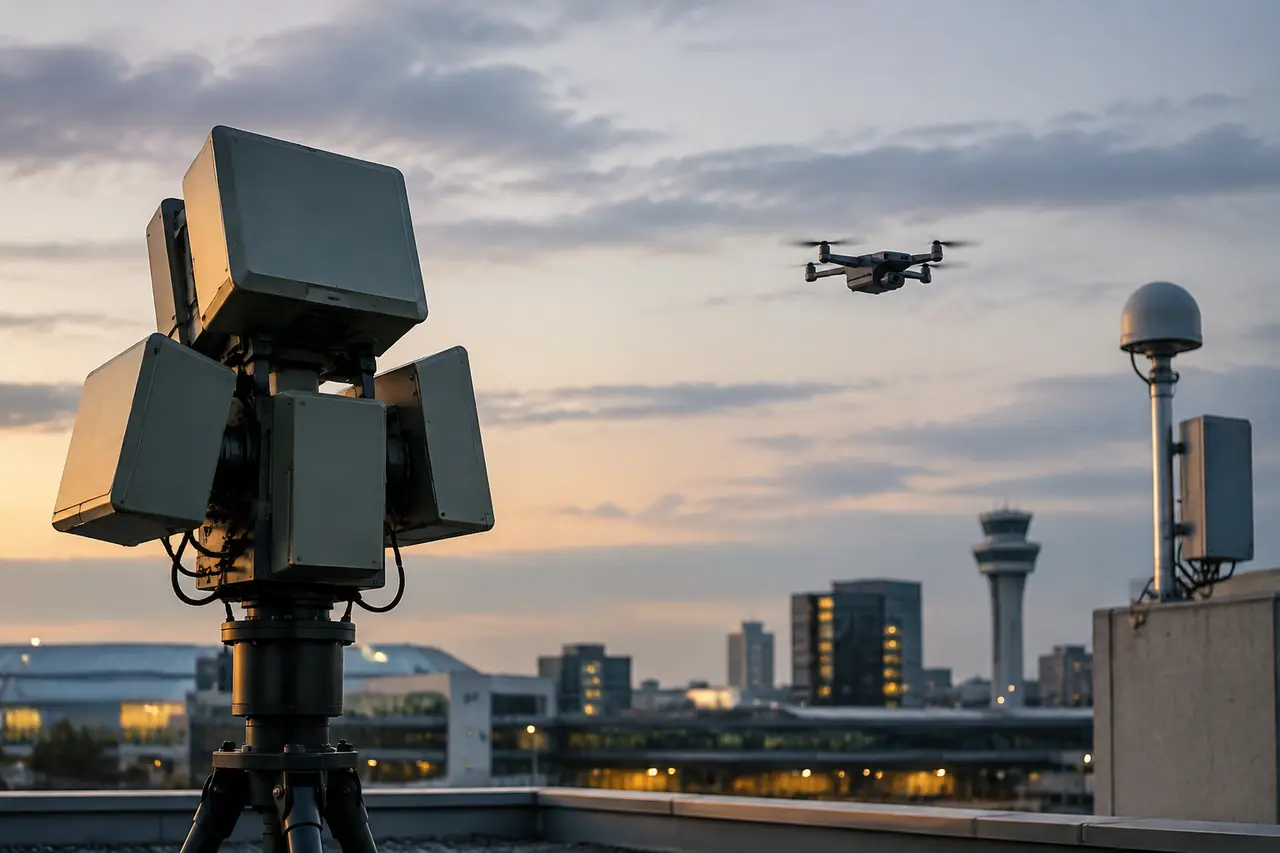
Counter-UAS PR is a credibility exercise: drone defense companies win trust by proving what their systems have demonstrated, not by promising to stop every drone. These eight rules cover how counter-unmanned aircraft system companies can communicate detection and mitigation accurately, handle regulation, reach defense media and measure results in 2027.
Why Has Counter-UAS Become a Major Defense Priority?
Unmanned aircraft are more accessible, capable and widely deployed than ever. Governments, military organizations, airports and critical infrastructure operators face harder questions about how to detect and respond to unauthorized drones. Drones can be used for surveillance, reconnaissance and other missions, and their low cost creates challenges for anyone protecting personnel, facilities and infrastructure.
That creates real opportunity for counter-UAS developers. It also creates an unusually demanding communications environment, because military customers, government agencies, investors and journalists all know that a controlled demonstration is different from reliable performance across operational environments.
1. Separate Detection From Mitigation
The central challenge in counter-UAS communications is the difference between detecting a drone and stopping it. Detection involves identifying or tracking a potential unmanned aircraft. Mitigation involves taking action intended to address the threat. The legal authority to use each capability may differ.
The U.S. Government Accountability Office draws this distinction in its report Counter-Drone Technologies and Federal Authorities. A company capable of identifying a drone is not necessarily capable of stopping it, and a successful test of one function does not equal complete protection. Explain what was tested, under what conditions and what limitations remain.
2. Avoid Absolute Claims
Defense marketing sometimes promises a system that detects every drone, protects any facility or eliminates unmanned aircraft threats. Such claims create serious credibility problems because counter-UAS performance depends on environmental conditions, target characteristics, system configuration and integration with other security capabilities.
Distinguish between laboratory results, controlled demonstrations, field testing and operational deployments. A successful test is meaningful, but it should be described accurately. Explain what the evidence demonstrates rather than implying capabilities that have not been established. Regulators have challenged overstated technology claims in other fields, as Virgo's review of AI washing cases shows.
3. Explain That Counter-UAS Is Not One Technology
Counter-UAS systems often combine several technologies. Detection may use radar, radio-frequency sensors, optical equipment, acoustic systems or a mix. These help operators identify, track and classify objects in the surrounding airspace. Other technologies may support responses to unauthorized aircraft, subject to legal and operational restrictions.
A company may want to call its product a comprehensive counter-drone solution. If it performs only certain functions, broad claims create unrealistic expectations. The strongest programs state precisely what a system does and what evidence supports it.
4. Use Regulatory Complexity to Show Expertise
Counter-drone technology operates in a complicated legal environment. In the United States, detecting or mitigating unauthorized aircraft can involve federal aviation, communications, security and law enforcement considerations. The GAO has documented restrictions affecting counter-UAS operations and the challenges agencies face.
Executives with genuine expertise can explain why certain capabilities are hard to deploy, how requirements differ among environments and why legal authorization matters. That commentary is valuable to journalists covering defense, aviation, national security and infrastructure protection, and it builds authority without relying on product announcements.
5. Match the Message to Military or Civilian Context
Military customers may prioritize operational effectiveness, integration with existing systems and performance under demanding conditions. Civilian infrastructure operators face added concerns about public safety, regulatory authorization and the consequences of mitigation activities.
A technology designed for one environment should not be presented as suitable for every other application. State the intended operating context and avoid unsupported claims of universal effectiveness, especially when discussing electronic warfare or other sensitive capabilities.
6. Pitch Defense Media With Technical Substance
Defense and aerospace audiences understand the differences among prototypes, demonstrations, procurement awards and operational deployments. Outlets such as Defense News, Breaking Defense, Aviation Week, National Defense and specialized unmanned-systems publications each cover different parts of the industry.
Match the journalist to the capability. A radar developer can add to discussions about detection and surveillance. An electronic warfare company can explain operating in contested electromagnetic environments. A systems integrator can describe combining technologies into a broader defensive architecture. Useful technical context beats generic claims about innovation. Virgo's SRC, Inc. defense PR case study shows a sustained program across radar, electronic warfare and counter-UAS coverage.
7. Build Stories Beyond Product Launches
Companies that communicate only when launching systems struggle to stay visible. A more sustainable approach builds recurring themes: evolving drone threats, detection limitations, integration requirements, operational testing, airspace security and changing customer needs. Executives can contribute through interviews, contributed articles and industry commentary.
Customer-approved case studies help too. A useful one explains the operational problem, technology, testing environment, verified results and relevant limitations, as laid out in what a useful tech PR case study must include. Avoid disclosing sensitive details that could create security concerns, and where performance data cannot be released, explain the broader significance instead of substituting vague claims for evidence.
8. Measure Credibility, Not Just Placements
Placement volume does not capture the value of a counter-UAS program. Evaluate whether coverage reaches relevant defense audiences, describes technical capabilities accurately and supports credibility goals. Useful measures include coverage in priority publications, executive interviews, technical message accuracy and visibility around relevant technology categories.
Also watch whether journalists return to your experts for commentary on later developments. Repeat engagement is a sign of growing editorial credibility.
What Is the Future of Counter-UAS Communications?
Counter-UAS technology will keep evolving as unmanned aircraft capabilities change, and companies developing detection, tracking, identification and mitigation technologies will face growing scrutiny from government customers and industry stakeholders. The environment will reward companies that explain what their systems can demonstrate. Technical accuracy, operational context and responsible disclosure will remain essential.
The Bottom Line
Counter-UAS public relations is fundamentally about credibility. Companies must explain complex technologies, demonstrate operational relevance and communicate verified capabilities responsibly. In an industry where security claims can have serious consequences, precision matters more than exaggeration. The strongest programs help audiences understand not only what a technology promises, but what it has actually demonstrated.
Related reading: Virgo PR's SRC, Inc. defense PR case study.
Sources and Further Reading
-
U.S. Government Accountability Office, Counter-Drone Technologies and Federal Authorities.
-
U.S. Government Accountability Office, counter-UAS technology and regulatory assessments.
-
Federal Aviation Administration, counter-UAS information and guidance.
-
U.S. Department of Defense, counter-small unmanned aircraft systems initiatives.
Follow us