Expertise · March 9, 2022
Market Positioning Through Communication Strategy
By Virgo PR Editorial Team. Reviewed by Kyle Porter, Executive Vice President & Managing Director.
Updated October 22, 2026
Market positioning through communications comes down to four practical levers: press samples timed before launch, event freebies that extend brand recall, integrated messaging repeated across owned channels, and a PR calendar built backward from publication dates. Companies that combine these earn coverage that shapes market perception before a paid campaign could reach the same audience.
Why does market positioning depend on communication strategy?
Journalists research and track developments across their beat continuously to stay useful to their readers. A company that makes itself a relevant, prepared source for that research earns coverage that shapes how the market positions it, ahead of when any paid campaign could reach the same audience.
How do press samples help with launch positioning?
Press samples give journalists something concrete to test before a launch instead of a press release alone. Identify the journalists most likely to cover a new product, then send an advance sample alongside the announcement. An early, credible review from a notable outlet does more for positioning than a paid ad campaign aimed at the general public, because it signals third-party validation instead of self-promotion.
How can event freebies extend brand visibility?
Product launch events create a positioning opportunity beyond the speaker lineup itself. Branded items, apparel, drinkware, tote bags, gift baskets, give attendees and press a physical reason to remember the brand and mention it afterward. Extend the same items to staff and event partners, not only press, so the brand recall compounds across every person who attended.
Why does integrating communications across channels matter?
Running PR separately from broader communications is a common mistake that limits how far a single placement travels. Coverage a business earns should be pushed out across its own social channels, email newsletter, and any other owned channel it runs, so a single placement compounds into repeated exposure instead of disappearing after one news cycle. This is the same discipline behind how earned, owned, and paid media work together.
How far in advance should a PR calendar be built?
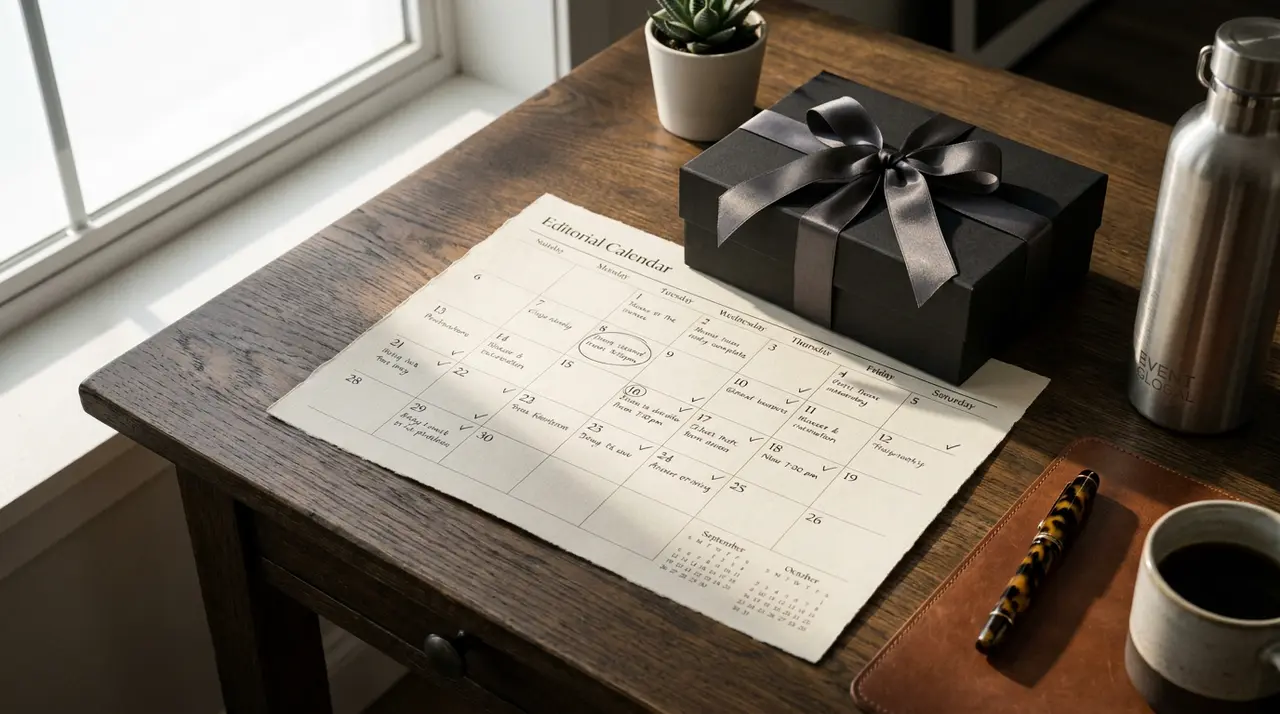
A PR calendar needs to work backward from the target publication date, not forward from today. Most outlets run on a set editorial schedule, daily, weekly, or monthly, so outreach has to land well before the moment a business wants coverage to appear. Map every planned announcement, event, and seasonal moment onto the calendar and count backward from the publication date: a company pitching Valentine's Day coverage in the first week of February is already too late, since outreach completed in December is what lands the story on schedule.
What is market positioning in PR?
Market positioning in PR is the practice of using earned media, messaging consistency, and timed communications to shape how the market perceives a brand relative to competitors, rather than relying only on paid advertising to state that position directly.
Why do press samples work better than a straight press release?
A press sample gives a journalist something concrete to test and describe firsthand, producing a review that reads as independent validation rather than a repackaged company announcement.
Who should hire a PR agency that builds positioning into every campaign?
Companies planning a launch, event, or seasonal push need positioning built in from the start rather than added after the fact. Virgo PR builds integrated communications campaigns that align media outreach with brand positioning from day one. See the PR KPIs and measurement guide for how to track whether positioning efforts are working, or talk to Virgo PR about your next campaign.
Follow us
Topics
- Product Launch
- Media Relations